
New Pet Owner Guide Australia: The Complete Starter Edition
This new pet owner guide Australia edition starts with the thing almost nobody explains before you bring a puppy home: the state you live in changes your dog’s registration deadline, the system you use, and how much you’ll pay.
Register late in Queensland and you’ve missed a 12-week deadline. Register late in the ACT and it’s 8 weeks. South Australia runs its own separate online system entirely. None of this is explained clearly in one place, which is exactly why new owners get caught out — usually with a fine, sometimes with a far more frightening problem involving a backyard and a brown snake.
This guide covers what generic “new pet owner” content always skips: the state-by-state registration differences, the breeds you legally cannot own anywhere in the country, exact parasite-prevention dosing by weight, and the wildlife risks that don’t exist in most other countries’ starter guides because most other countries don’t have this wildlife.
Quick Answer — What You Need to Know Right Now:
| Your Situation | What You Need to Do | Deadline |
|---|---|---|
| Getting a puppy in NSW | Register via NSW Pet Registry | By 6 months old |
| Getting a puppy in QLD | Register with local council | By 12 weeks old |
| Getting a puppy in SA | Register via Dogs and Cats Online (DACO) | By 3 months old |
| Getting a puppy in the ACT | Register on the ACT Dog Database | By 8 weeks old |
| Considering a Pit Bull, Dogo Argentino, or similar | Don’t — nationally restricted/banned | N/A |
| Living near bushland, water, or long grass | Learn snake bite signs now, not during an emergency | Ongoing |
| Using NexGard or similar parasite prevention | Match the dose to your dog’s exact weight | Monthly |
All prices in this guide are listed in AUD with USD conversions for reference. Exchange rates fluctuate — treat USD figures as approximate.
Table of Contents
- Can You Even Get the Dog You Want? Banned and Restricted Breeds
- Registration & Microchipping: Why Your State’s Rules Are Completely Different
- Before Your Pet Comes Home: The Australia-Specific Checklist
- The First 24 Hours
- Parasite Prevention: Exact Weight Classes and the Paralysis Tick Problem
- Wildlife Risks Nobody Mentions in Generic Guides
- What New Australian Pet Owners Get Wrong
- Where to Buy: Petbarn vs Pet Circle vs Amazon.com.au
- The Real Cost of Pet Ownership in Australia
- Official Links & Regulatory Checklist
- The Verdict: Your New Pet Owner Guide Australia Takeaway
1. Can You Even Get the Dog You Want? Banned and Restricted Breeds
Five breeds are restricted or banned from import at the national level, enforced through the Customs (Prohibited Imports) Regulations alongside state-based companion animal laws:
- American Pit Bull Terrier
- Dogo Argentino
- Fila Brasileiro
- Japanese Tosa
- Perro de Presa Canario
Certain wolf-dog hybrids are also barred from entry. Importation of all five breeds is prohibited outright. Ownership of dogs already in the country before the relevant bans is sometimes possible under strict grandfather conditions — mandatory enclosures, muzzling, signage, desexing, and lifetime registration — but this varies by state and is not a path to acquiring a new one.
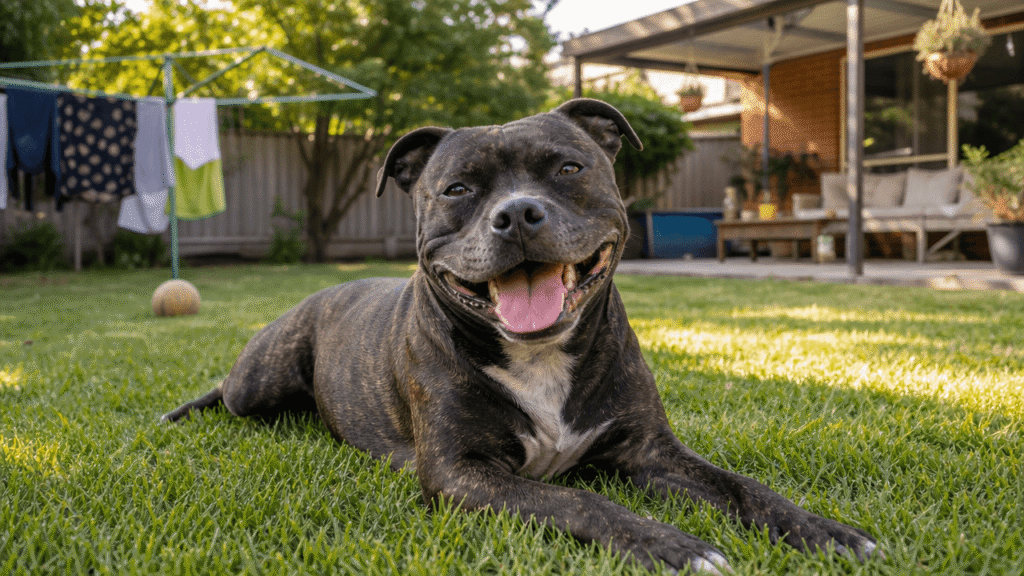
Commonly confused, but not banned: the Staffordshire Bull Terrier is frequently mistaken for an American Pit Bull Terrier and is legal across every state and territory. If you’re being told a “Staffy” is illegal, that’s incorrect.
Beyond the five nationally restricted breeds, individual states maintain their own “dangerous dog” or “menacing dog” declarations that apply regardless of breed — any dog can be declared dangerous based on its actual behaviour and history, not just its breed. NSW and Victoria both operate this dual system: a fixed restricted-breed list, plus a behaviour-based declaration process that can apply to any dog.
2. Registration & Microchipping: Why Your State’s Rules Are Completely Different
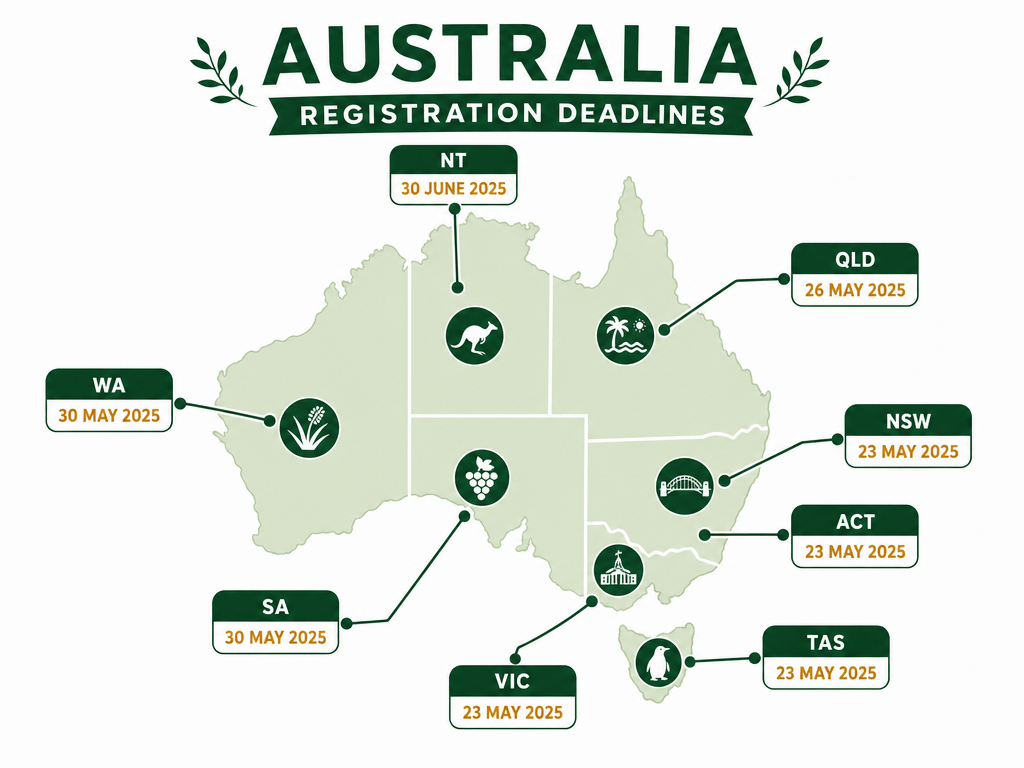
This is the part of pet ownership in Australia that genuinely catches new owners off guard — there is no single national system. Each state runs its own, with deadlines ranging from 8 weeks (ACT) to 6 months (NSW, TAS) and systems ranging from a single state-run portal (SA’s Dogs and Cats Online) to dozens of independent council systems (WA, NT). Microchipping typically runs $45–80 AUD (~US$30–55), one-time. Council registration is a separate, ongoing annual cost on top of that — generally $50–100 AUD/year (~US$35–70) for a desexed pet.
That’s the version everyone needs at a glance. The full picture — every state’s exact deadline, fee structure, concession rules, the WA sterilisation refund most owners miss, and how restricted-dog declarations actually work — is covered in depth in a dedicated guide: 👉 Dog Registration Laws in Australia — Every State Compared
3. Before Your Pet Comes Home: The Australia-Specific Checklist
- Check your specific council’s registration deadline and system before adoption day — it varies enough between neighbouring councils that assuming “the same as my last dog” can genuinely be wrong.
- Snake-proof and tick-proof the yard if you’re in a tick-endemic or snake-active area (see the wildlife section below) — this is genuinely more relevant pre-arrival prep than most generic checklists acknowledge.
- Heatstroke planning. Summer pavement and car interior temperatures in much of Australia are a real and immediate danger, not a vague caution — never leave a pet in a parked car, and adjust walk timing to early morning or evening in peak summer.
- If you’re in a high-risk tick zone (Australia’s eastern seaboard, in particular), read our dedicated paralysis tick prevention guide before your pet’s first outdoor exposure — it’s a separate, serious risk from the general parasite prevention covered below.
- Confirm desexing requirements and incentives in your specific council area — fee structures often make early desexing the financially smart choice, not just the responsible one.
4. The First 24 Hours
The emotional and behavioural adjustment is the same as anywhere — a new pet leaving littermates and a familiar environment is under genuine stress, and the first 72 hours shape the routine that follows. What’s specifically Australian here is the outdoor environment: don’t let a new dog or cat explore the yard unsupervised on day one, particularly anywhere with long grass, woodpiles, or garden edges, until you’ve done at least a basic check for snake activity and tick exposure. This isn’t paranoia — it’s a five-minute walk-through that meaningfully reduces real risk in the first days when you don’t yet know your new pet’s instincts around wildlife.
5. Parasite Prevention: Exact Weight Classes and the Paralysis Tick Problem
Australia’s flea and tick landscape includes a genuinely unique hazard: the paralysis tick (Ixodes holocyclus), found along the eastern seaboard and capable of killing a dog or cat within days if untreated. We cover this threat in full in our dedicated paralysis tick guide — this section focuses on getting the day-to-day dosing right.
NexGard (afoxolaner) is dosed by weight, not breed or age, using the official Australian label:
| Dog Weight | Chewable Size | Afoxolaner per Chew |
|---|---|---|
| 2 – 4 kg | 0.5 g | 11.3 mg |
| 4.1 – 10 kg | 1.25 g | 28.3 mg |
| 10.1 – 25 kg | 3 g | 68.0 mg |
| 25.1 – 50 kg | 6 g | 136.0 mg |
| Over 50 kg | Combine chewables per vet guidance | — |
Standard dosing is 2.5 mg afoxolaner per kg of bodyweight monthly. NexGard treats and controls paralysis ticks, brown dog ticks, and bush ticks, in addition to fleas, demodectic and sarcoptic mange, and ear mites — but paralysis ticks specifically (Ixodes holocyclus) do not occur in Western Australia, so WA-based owners are managing a different risk profile than owners on the eastern seaboard.
Important nuance the product label itself states clearly: NexGard alone does not entirely remove paralysis tick risk. It should be used alongside daily manual searching and removal of ticks, particularly during tick season. Effective control of pre-existing infestations takes roughly 24 hours; the company’s own studies show 48-hour effectiveness against paralysis and brown dog ticks specifically.
NexGard is safe from 8 weeks of age and has been shown safe in dogs carrying the ABCB1/MDR1 gene mutation common in ivermectin-sensitive Collie breeds. Side effects are uncommon — vomiting, diarrhoea, lethargy, reduced appetite, itching, and rarely seizures.
6. Wildlife Risks Nobody Mentions in Generic Guides
This section exists because most “new pet owner” content is written for a global audience, and most of the global audience doesn’t live somewhere with this wildlife.
Snake bite is the big one. Australia has some of the most venomous snake species in the world, and the Eastern Brown, Tiger Snake, and Red-bellied Black Snake account for the large majority of veterinary snakebite cases in pets. The genuinely dangerous part isn’t the bite itself — it’s the misleading recovery pattern that follows it.
A dog bitten by a brown snake commonly collapses, then appears to recover and acts completely normal within minutes. This is not a sign your dog is fine. It’s a sign of a lethal envenomation dose, and the apparent recovery can precede a serious deterioration in the following 24 hours. Treat any witnessed or suspected snake encounter as an emergency regardless of how the dog seems immediately afterward.
What to actually do: get to a vet immediately, keep your pet as still as possible (movement spreads venom faster through the lymphatic system), do not apply a tourniquet, do not attempt to suck out venom, and don’t waste time trying to identify or catch the snake — vets use a venom detection test kit rather than relying on identification. Survival rates with prompt antivenom treatment are around 75% for dogs and considerably higher for cats. Testing and treatment costs can run from roughly $850 AUD for diagnostics up to $1,000+ AUD per antivenom vial, so this is also a genuine financial planning consideration, not just a medical one.
Reduce risk pre-emptively: keep grass short, remove woodpiles and rubbish that shelter snakes, use a leash in bushland or near water during warmer months, and never let a pet investigate a snake, alive or apparently dead.
Heatstroke is the other major, under-discussed risk, particularly for flat-faced breeds. Pavement and car interior temperatures climb dangerously fast in Australian summer conditions — adjust exercise timing accordingly and never leave a pet in a parked vehicle, even briefly, even with windows cracked.
7. What New Australian Pet Owners Get Wrong
The most common mistake: assuming registration rules are the same as a friend’s experience in a different state, or even a different council within the same state. They frequently aren’t — deadlines, systems, and fees genuinely vary that much.
Second most common: treating a snake encounter as resolved because the dog “seemed fine” within minutes. This single misunderstanding is responsible for delayed vet visits that meaningfully worsen outcomes.
A recurring complaint from new owners in tick-endemic areas: relying on monthly chewable prevention alone and skipping the daily manual tick check during peak season. The product label itself states this combination is the actual recommended protocol, not chewable prevention in isolation.
First-time owners frequently underestimate desexing fee incentives — many councils charge two to three times more for a non-desexed dog’s annual registration, on top of the health and behavioural reasons to desex early.
8. Where to Buy: Petbarn vs Pet Circle vs Amazon.com.au
| Platform | Best For | Trade-off |
|---|---|---|
| Petbarn | In-person purchases, grooming/vet services on-site at many locations | Generally higher prices than online-only retailers |
| Pet Circle | Australia-focused online retailer, frequent subscription discounts | Delivery timing varies by location |
| Amazon.com.au | International brand availability, familiar return process | Smaller specialty pet catalogue than the dedicated platforms |
For parasite prevention and prescription products specifically, buying through a registered veterinary clinic or an APVMA-compliant retailer is worth the price premium — counterfeit and grey-market parasiticide packaging is a real, documented problem internationally, and the consequences of an underdosed or fake product in tick season are serious.
9. The Real Cost of Pet Ownership in Australia
| Cost Category | Typical Range (AUD) | USD equivalent* |
|---|---|---|
| Microchipping (one-time) | $45–80 | ~US$30–55 |
| Council registration (desexed, annual) | $50–100 | ~US$35–70 |
| Parasite prevention (monthly) | $20–40 | ~US$14–28 |
| Snake bite diagnostics (if needed) | ~$850 | ~US$590 |
| Snake bite antivenom (per vial, if needed) | $1,000+ | ~US$700+ |
| Annual vaccinations | $100–200 | ~US$70–140 |
| Monthly food & supplies | $60–150 | ~US$42–105 |
*USD figures are approximate and will shift with exchange rates — treat them as a rough reference point, not a live conversion.
The snake bite figures are listed deliberately, even though most pet owners will never need them — they’re a genuine, foreseeable cost specific to Australian pet ownership that essentially no other country’s starter guide needs to mention, and pet insurance decisions are worth weighing against this specific risk if you live in a snake-active area.
10. Official Links & Regulatory Checklist
- For the full state-by-state breakdown — every fee, deadline, concession, and the restricted-dog declaration process — see our Dog Registration Laws in Australia guide
- NSW: Register and manage your pet via the NSW Pet Registry
- Victoria: Check current registration fees and rules via Agriculture Victoria — Dog and Cat Registration
- South Australia: Register via Dogs and Cats Online (DACO)
- ACT: Register via the ACT Dog Database through Access Canberra
- NSW restricted breed rules: Review directly via NSW Office of Local Government — Restricted Dogs
- Always confirm current registration deadlines and fees with your specific local council, since these can differ from the statewide defaults described above
11. The Verdict: Your New Pet Owner Guide Australia Takeaway
Pet ownership in Australia is straightforward day-to-day, but the legal and environmental layer underneath it is genuinely more complex than most countries’ — eight different registration systems, a small but absolute list of breeds you can never own, and wildlife risks that are simply not on the radar of most generic “new pet owner” advice.
None of this should be a deterrent. If this new pet owner guide Australia edition leaves you with one habit, make it a checklist completed once, properly, before the puppy or kitten actually arrives — because the cost of getting the registration deadline wrong is a fine, and the cost of getting the snake-bite response wrong is considerably higher than that.



One Comment