
Pet GPS Tracker — What Every Owner Needs to Know Before Buying
One in three pets will go missing at some point in their lifetime. Around 10 million pets go missing in the US every year, and only about 15% of dogs and 2% of cats without any form of identification are ever reunited with their owners.
A microchip is passive — it only helps if someone finds your pet and takes them to a vet or shelter. A pet GPS tracker is active. It tells you where your animal is right now, while you can still do something about it.
This page covers everything you need to understand about GPS trackers for dogs and cats — how they work, what the real differences between models are, and what questions to ask before you spend money on one.
Why Pet Owners Are Turning to GPS Trackers
Most pet escapes aren’t dramatic. They’re a delivery driver who didn’t fully close the gate. A spooked dog at a backyard barbecue. A cat who found a gap under the fence you never noticed.
July is statistically the most dangerous month for pets — 40% of yearly pet losses occur during that period, largely driven by fireworks, summer guests, and open doors. By the time you’ve checked the backyard and started printing flyers, a fast dog can cover a lot of ground. Pet911
Pet owners on Reddit’s r/dogs and r/cats consistently describe the same experience: the panic sets in fast, and the first hours are the ones that matter most. The chances of finding a missing dog drop by 60% after just 24 hours. A GPS tracker compresses that window from hours to minutes.
Studies show that over 80% of pets with GPS trackers are found and returned to their owners — compared to that 15% recovery rate for pets with no identification at all. That gap is the reason pet GPS trackers have gone from niche gadget to mainstream pet safety tool.
GPS Tracker vs Microchip — What’s the Difference?
This question comes up constantly, and the answer matters.
A microchip is implanted under your pet’s skin and carries a unique ID number. It’s permanent, costs about $45–$70 once, and requires no battery. But it’s completely passive — it only works if someone finds your pet, has access to a scanner, and takes the time to check. Most shelters scan incoming animals, but a pet picked up by a well-meaning neighbour or simply hiding somewhere may never get scanned.
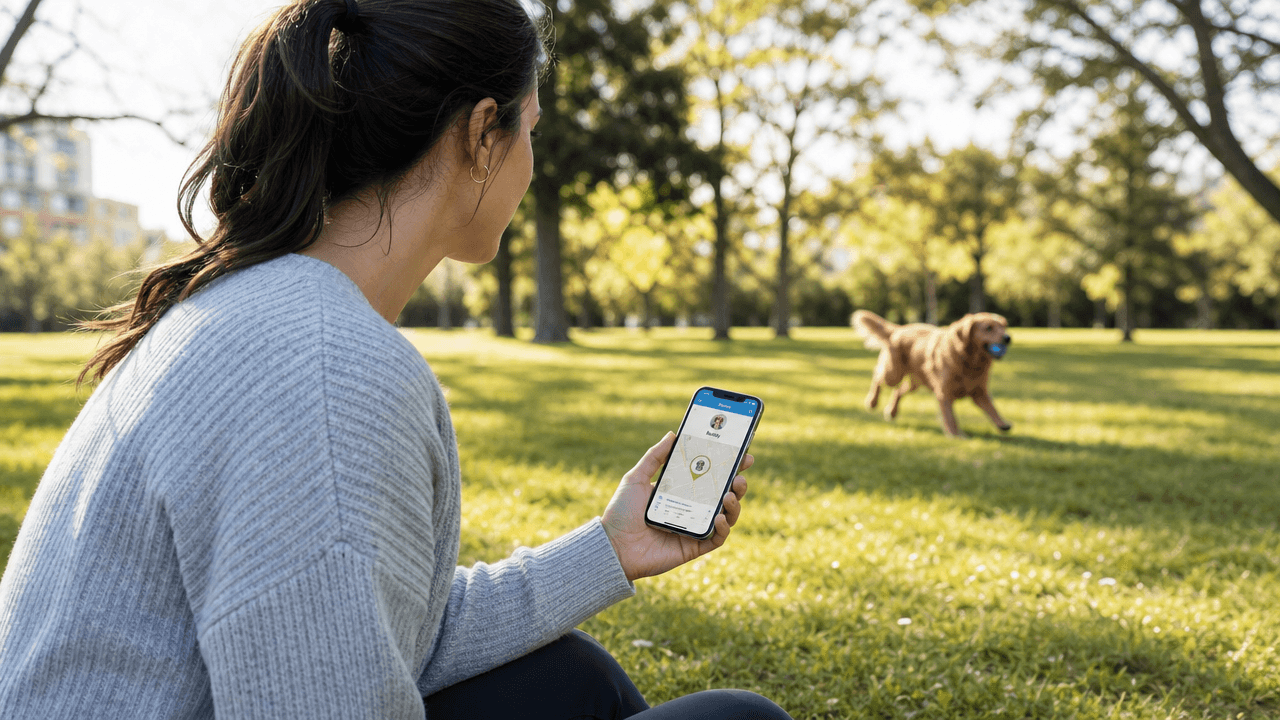
A pet GPS tracker sits on your pet’s collar and uses a combination of GPS satellites and cellular networks to pinpoint your pet’s location in real time. Most devices sell for under $100 but require a subscription of around $100 per year for cellular service. You can track your pet from your phone, set up safe zone alerts, and know the moment they leave your property.
They aren’t competing products — they’re complementary. Most experienced pet owners use both.
How Does a Pet GPS Tracker Actually Work?
Pet trackers like Tractive and Whistle use GPS and 4G LTE to pinpoint your pet’s location and send alerts if they leave a defined safe zone.
Here’s the basic flow:
The tracker attaches to your pet’s collar. It picks up satellite signals to determine location, then transmits that data via a cellular network to a smartphone app. When your pet moves outside a boundary you’ve set — your yard, your street, your block — you get a notification immediately.
The key variables that separate good trackers from disappointing ones are update frequency (how often the location refreshes), coverage area (which cellular networks they use), and battery life (which drops fast with frequent updates). We cover all of these in detail in our full buyer’s guide below.
What Real Owners Say — Lessons Learned the Hard Way
Across owner forums, review threads, and Reddit communities, a few themes come up repeatedly about pet GPS trackers:
“I wish I’d bought it before the first escape, not after.” This is the most common regret. Most owners who eventually buy a tracker do so after a close call or an actual loss. The ones who buy proactively rarely regret it.
“The subscription feels annoying until it saves your dog.” The recurring monthly cost is the biggest hesitation point for buyers. But the owners who’ve actually used a tracker in a real emergency treat the subscription the same way they treat pet insurance — it feels unnecessary right up until it isn’t.
“Battery life matters more than I expected.” High-frequency tracking (every 2–3 seconds) drains batteries fast. Several owners report their tracker was dead when they actually needed it. Charging habits matter. Some trackers have low-battery alerts; look for that feature specifically.
“Cats are harder.” A tracker that works perfectly on a 30kg Labrador might be too heavy or bulky for a small cat. Weight matters more than most buyers expect — look for anything under 35g for cats.
What to Look for in a Pet GPS Tracker
Before you buy, these are the factors that actually separate good trackers from frustrating ones:
Update frequency — Budget trackers update every 60 seconds. The better ones update every 2–3 seconds. When your dog is running, that gap matters.
Coverage area — Check which cellular networks your tracker runs on, and whether they have coverage in your specific area. A tracker with no signal is useless. This is especially relevant for owners in Australia and Singapore, where not all US-marketed devices have local coverage.
Subscription cost — Most devices require a subscription of around $100 per year for cellular service. Factor this into your total cost over two to three years, not just the upfront price.
Battery life — Ranges from 2 days to 14 days depending on the model and update frequency. If you’re the type to forget to charge things, prioritise battery life over update speed.
Weight and fit — Under 35g for cats and small dogs. Heavier than that and your pet will work to remove it.
Water resistance — Your pet will get wet. Minimum splash-proof; ideally fully waterproof.
GPS Trackers vs Health Monitors — Two Different Tools
A growing number of devices now combine GPS location tracking with health monitoring — measuring heart rate, respiratory rate, sleep quality, and daily activity. These aren’t the same as pure GPS trackers, and the difference matters when you’re choosing.
A pure GPS tracker tells you where your pet is. A health monitor tells you how your pet is doing. A combined device does both, but typically at higher cost and with more demanding battery requirements.
If your main concern is escape and recovery, a GPS-only tracker is the more practical and affordable choice. If you have an older pet, a breed prone to cardiac issues, or a pet recovering from illness, the health data from a combined device may be genuinely useful — not just a gimmick.
Ready to Find the Right Tracker?
Our full buyer’s guide covers every major GPS tracker available for US, Australian, and Singapore buyers — with pricing, subscription costs, real owner feedback, and honest verdicts on which ones are actually worth buying.
👉 Best GPS Trackers for Dogs and Cats — US Buyer’s Guide 2026
More country-specific guides for Australia and Singapore coming soon.