PetPhone Smartphone for Pets: Worth It, or Expensive Gimmick?
A PetPhone smartphone for pets costs $60 less than a year ago than it does right now. That’s not a typo — uCloudlink’s “world’s first smartphone for pets” launched in March 2025 at under $60, and by March 2026 the same hardware was selling for $89.99 on sale, with a regular price closer to $105.
That kind of price climb usually means one of two things: the company found real demand and adjusted accordingly, or the launch price was a loss-leader to generate buzz before settling into what it actually costs to make money. Either way, it’s worth knowing before you read another word of the marketing copy for the PetPhone smartphone for pets.
Quick Answer:
| Question | Answer |
| What is it? | A pet collar with cellular connectivity, GPS-style tracking, and a two-way “calling” feature |
| Does the GPS tracking work well? | Yes — independently tested and genuinely strong, especially indoors |
| Does the “your pet can call you” feature work? | Not reliably — independent testing found it confusing for both pet and owner |
| Is there a subscription? | Yes, required for calling — roughly $5–10/month depending on plan length |
| Who actually benefits? | Owners who travel internationally or live in dense, GPS-unfriendly buildings |
Table of Contents
- What the PetPhone Smartphone for Pets Actually Is
- The Calling Feature: What Happens When You Actually Try It
- Where It Genuinely Excels: The Indoor GPS Problem Nobody Else Solved
- The AI Emotion Detection Claims: Verified vs. Marketing
- The Subscription You Didn’t See on the Box
- Only 11 Reviews: What the Review Count Actually Tells You
- The Verdict on the PetPhone Smartphone for Pets
1. What the PetPhone Smartphone for Pets Actually Is
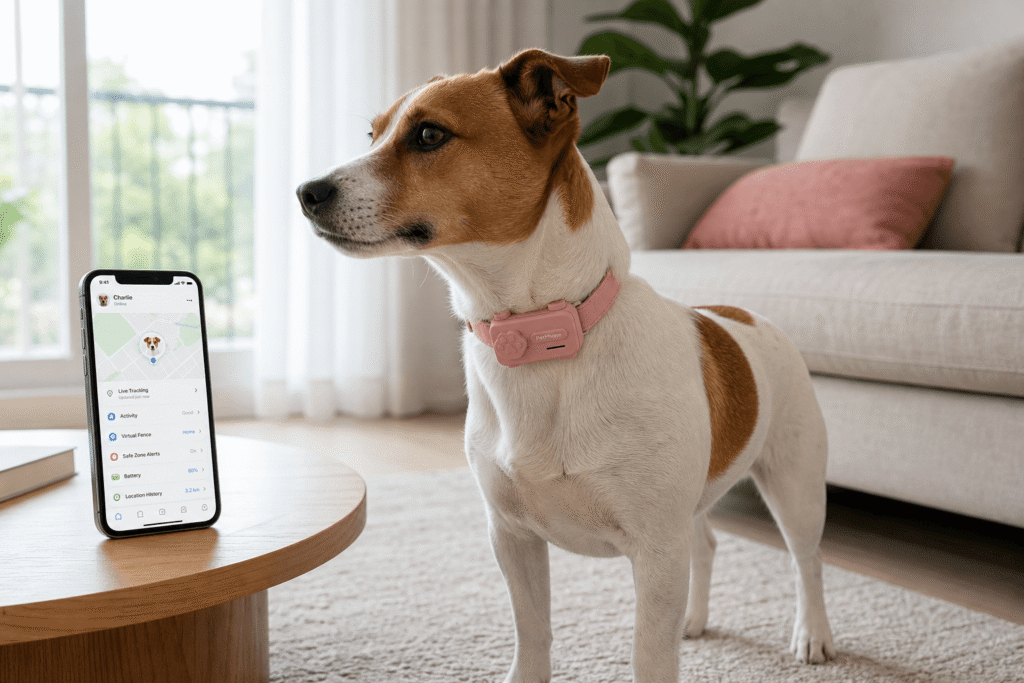
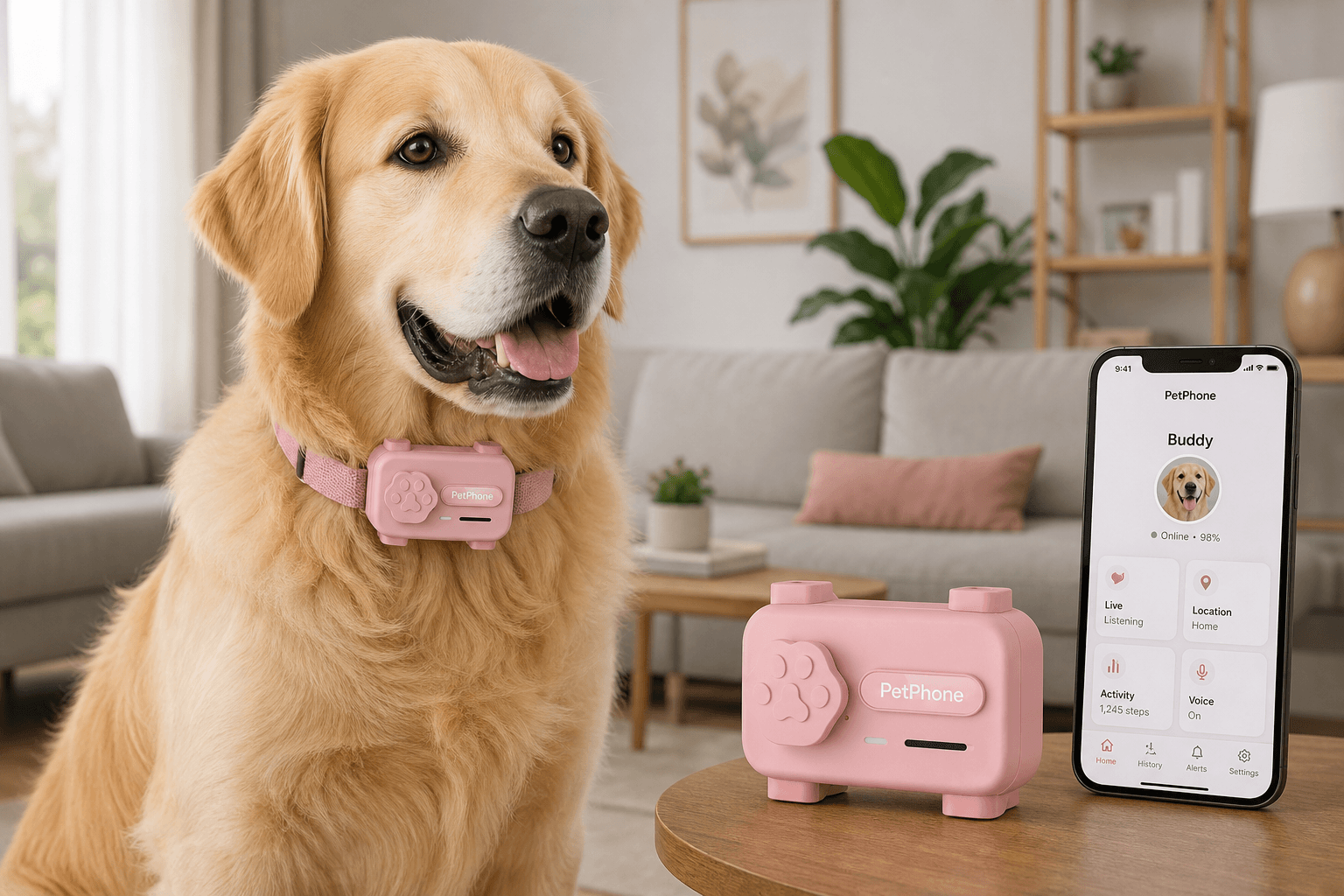
uCloudlink — a Nasdaq-listed mobile connectivity company (UCL) better known for its GlocalMe international Wi-Fi hardware — unveiled the PetPhone smartphone for pets at Mobile World Congress in Barcelona in 2025, then expanded the lineup into a full “PetPogo” ecosystem (PetPhone plus a companion PetCam) at CES 2026.
The core hardware uses what uCloudlink calls six-layer hybrid positioning: GPS, assisted GPS, LBS (cell tower location), Wi-Fi positioning, Bluetooth, and an active radar-style search function, all working together rather than relying on GPS alone. Connectivity runs through the company’s CloudSIM technology — no physical SIM card, with the collar automatically connecting to whichever of 390+ carriers across 200+ countries gives the best signal.
The headline feature, branded “Paw Call Me,” lets your pet trigger an actual phone call to you. Dogs do this with three jumps of at least a foot off the ground within six seconds. Cats trigger it by jumping onto a surface roughly three feet high. The PetPhone smartphone for pets also runs on-device AI that’s supposed to track activity and flag behavioral shifts — anxiety, restlessness, fatigue — based on movement pattern changes over time.
2. The Calling Feature: What Happens When You Actually Try It
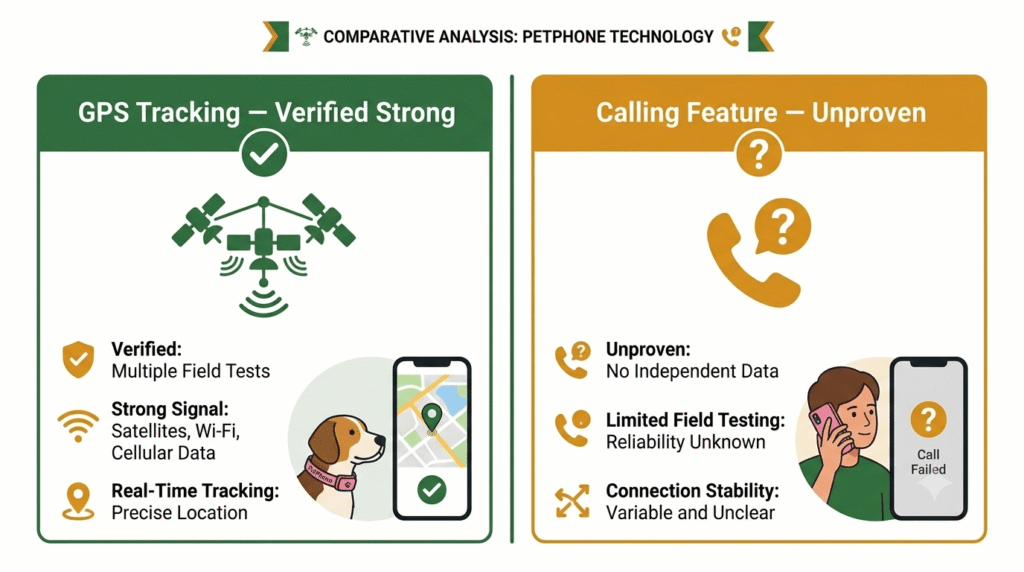
This is where independent testing tells a very different story than the press releases for the PetPhone smartphone for pets.
Slate’s technology desk tested the PetPhone smartphone for pets for several months with a Cavalier King Charles Spaniel already known for above-average trainability — a dog that already knew several tricks before the test began. Despite a week of dedicated training using uCloudlink’s own instructional video, the dog struggled to reliably perform the jump-trigger gesture needed to “call” her owner.
More tellingly, the reviewer found that the calling feature didn’t deepen the human-pet connection it promised. If anything, the unfamiliar signal confused the dog and made the reviewer feel more distanced from her pet during the test period, not less — the opposite of the product’s core pitch.
The reviewer’s broader critique cuts deeper than one feature not working well: the entire premise assumes dogs are “excluded from the digital world” and need a literal phone-like device to express themselves. But dogs already communicate constantly through posture, vocalization, and behavior — and separate research into augmentative communication tools (like soundboards) shows dogs can learn surprisingly sophisticated ways to signal needs without anything resembling a phone call.
3. Where It Genuinely Excels: The Indoor GPS Problem Nobody Else Solved
Here’s the part of the independent review that should actually move a buying decision: location tracking.
The same Slate review that found the calling feature underwhelming also reported that the positioning system on the PetPhone smartphone for pets “remained impressively accurate” during testing, without the blind spots or wandering location dots that plague typical consumer GPS trackers.
This addresses a real, documented problem. Standard single-technology GPS trackers can show location errors exceeding 50 meters in dense urban environments — underground garages, high-rise buildings, and tightly packed city blocks all interfere with satellite signal in ways that make a “blue dot” next to useless exactly when you need it most. The PetPhone smartphone for pets‘s combination of Wi-Fi and cell-tower fallback alongside GPS is specifically designed to close that gap, and the independent test data backs up the claim.
This matters most for two specific groups: apartment dwellers in dense high-rises (where GPS-only trackers are weakest), and international travelers, since CloudSIM eliminates the SIM-swapping hassle that normally comes with bringing a GPS tracker across borders.
4. The AI Emotion Detection Claims: Verified vs. Marketing
uCloudlink’s own promotional material includes a specific anecdote regarding the PetPhone smartphone for pets: a Shanghai pet owner whose Ragdoll cat showed “signs of anxiety” at 3 AM, prompting a PetPhone alert; the owner called her cat, played a soothing recording, and the cat reportedly calmed down within exactly ten minutes.
That level of narrative precision — a named owner, a named pet, an exact resolution time — is a pattern worth recognizing as company-supplied marketing copy rather than independently verified data. There’s no published methodology behind the “AI emotion recognition” claim, no third-party validation of accuracy rates, and no comparison against how the same dog or cat would have settled without intervention.
That doesn’t mean on-device activity monitoring is fake — tracking movement patterns, distance, and general activity level is genuinely achievable with accelerometer-based sensors, the same basic technology behind human fitness trackers. The leap from “tracks movement” to “detects anxiety versus excitement versus fatigue” is a much bigger claim, and it’s one no independent reviewer has yet verified with real accuracy data.
5. The Subscription You Didn’t See on the Box
The hardware price of the PetPhone smartphone for pets doesn’t include what you actually need to use the headline features. A required CloudSIM service plan runs roughly $5/month on a three-year commitment (with the first month free), or closer to $10/month on shorter terms.
This follows the same pattern as most cellular pet trackers on the market — the device itself is the hook, the subscription is the actual business model. Worth factoring the full multi-year cost into any comparison against a one-time-purchase Bluetooth tracker or a traditional GPS collar with no recurring fee.
6. Only 11 Reviews: What the Review Count Actually Tells You
As of writing, the listing for the PetPhone smartphone for pets on GlocalMe’s own store shows 11 reviews averaging 5 stars. That’s a reasonable start for a first-generation device, but it’s worth being precise about what that number actually represents: a small sample, on the manufacturer’s own retail platform, rather than a large, independently-moderated review base like Amazon’s.
This isn’t a reason to dismiss the product — every new device starts with a small review count. It is a reason to weight the independent journalism (Slate’s hands-on test) more heavily than the marketing copy until a larger, more diverse review base exists on a third-party platform.
7. The Verdict on the PetPhone Smartphone for Pets
Split verdict, because this is genuinely two products wearing one collar.
As a GPS tracker: Worth considering, especially if you live in a dense city, a high-rise apartment, or travel internationally with your pet. The six-layer positioning is a real engineering improvement over single-technology trackers, and the CloudSIM international coverage solves a genuine travel headache.
As an emotional “phone for your pet”: Treat this as the experimental, unproven layer it actually is. Independent testing found the calling feature confusing rather than bonding, and the emotion-detection claims rest on marketing anecdotes rather than published accuracy data. If the calling feature works for your specific dog, treat it as a pleasant surprise — not the reason to buy.
The honest recommendation: if location tracking and international travel coverage are what you actually need, the PetPhone smartphone for pets is a legitimate, well-engineered option. If you’re buying it hoping your dog will genuinely “call” you and you’ll feel closer because of it, the most rigorous independent test available says to lower that expectation substantially before you spend the money.
Where to Buy
- Available through GlocalMe’s own store, Amazon, and Chewy
- Price has fluctuated significantly since 2025 launch — check current pricing before publishing exact figures, as this is clearly an evolving price point
- Direct Amazon buy link: “PetPhone uCloudlink pet smartphone GPS collar“
If you’re interested in similar gadget, read our GPS Tracker page