Neakasa Riko Review: Honest Take on the 2026 Feeder
Wet cat food shouldn’t sit out for more than two to four hours. Bacteria like Salmonella and Listeria can double every 15-20 minutes in that window, and the food often looks and smells completely normal the whole time. That single fact is the real test for any wet-food feeder. Most of the early Neakasa Riko coverage skips it entirely in favor of “world’s first” headlines.
Here’s what this neakasa riko review found: how Riko’s design handles the food-safety question, what its marketing conveniently doesn’t fully cover, and what Neakasa’s track record on a previous crowdfunded product tells you about the risk of backing this one.
Quick Answer
| Question | Short Answer |
|---|---|
| What does it do? | Grinds freeze-dried cat food and rehydrates it into a fresh wet meal at feeding time, rather than storing pre-made wet food |
| Does it solve the spoilage problem? | Mostly — small portions (up to 20/day) made fresh at each scheduled time, not one big meal sitting out |
| What’s not addressed? | A cleaning kit is included and the grinder is “self-sealing” — but whether that’s actually enough for daily real-world maintenance is untested by anyone independent yet |
| Food compatibility | Freeze-dried only, pieces under 15×15×25mm. Dry kibble isn’t recommended |
| Neakasa’s track record | M1 litter box raised $1.15M on Indiegogo in 2023 and was genuinely delivered — verified by real 2024-2025 buyer discussion |
| Price | VIP early pricing $109-$139 per unit; bundle sets (Starter, Everyday) likely cost more, exact bundle pricing not independently confirmed |
Table of Contents
- What Riko Actually Does
- The Food-Safety Question
- Cleaning the Grinder: What’s Actually Untested
- Food Compatibility: The Fine Print
- Neakasa’s Track Record: The M1 Precedent
- What’s Still Unknown
- The Bottom Line
What Riko Actually Does
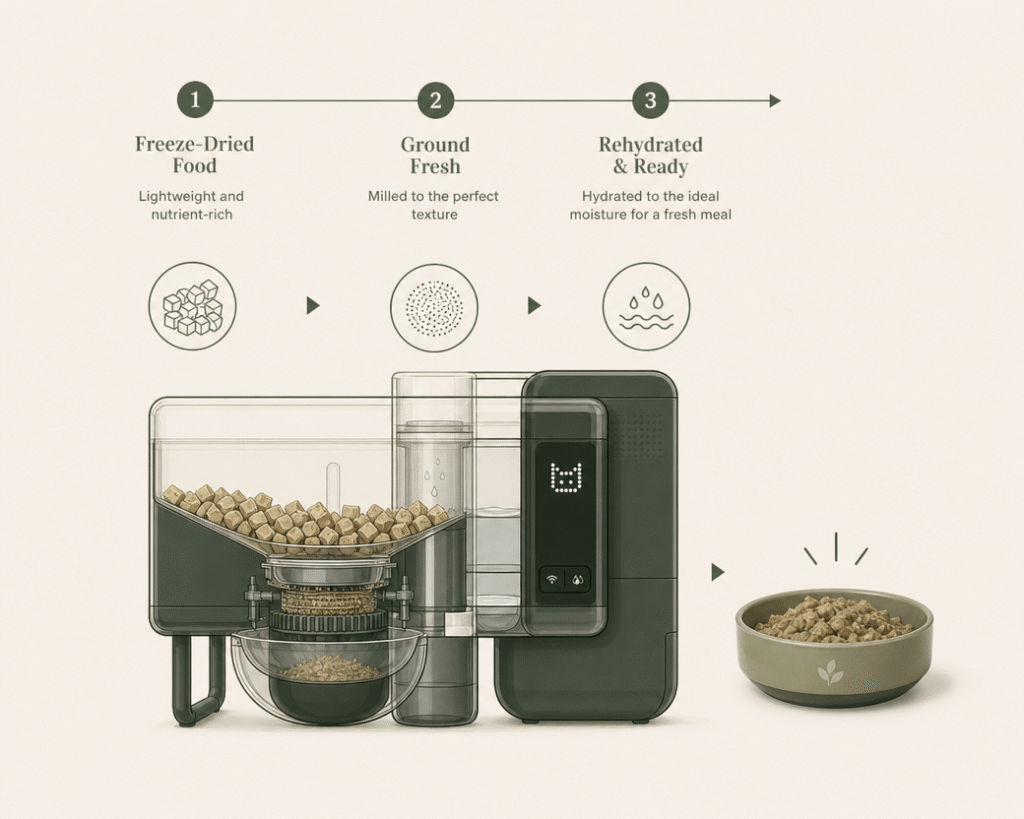
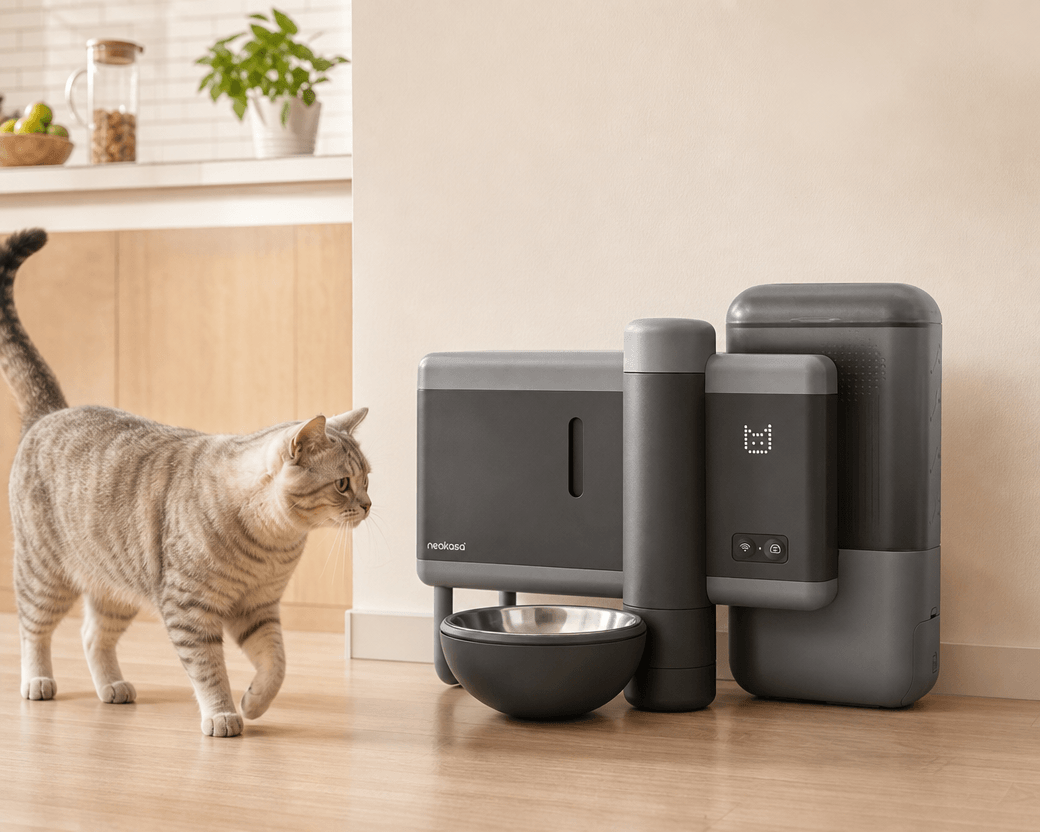
No cans, no thawing. Riko grinds freeze-dried food and rehydrates it right before your cat eats, and Neakasa describes it as the world’s first smart feeder designed to prepare wet meals this way, debuted at CES 2026, in portions as small as 1 gram, up to 20 times a day. The water-to-food ratio is adjustable from 1:1 to 5:1 through the app. It supports roughly 10 days of unattended feeding, runs cordless for up to 7 days on battery, and offers an optional microchip-recognition module for multi-cat homes — the bowl retracts if the wrong cat shows up.
One detail worth knowing: the water is room temperature, not heated. Neakasa says they tested heated water early on and dropped it — it made the system more complex and pulled too much power. Instead they lean on grinding the food finer and giving it more soak time. Reasonable tradeoff. Also means don’t expect a warm meal.
The Food-Safety Question
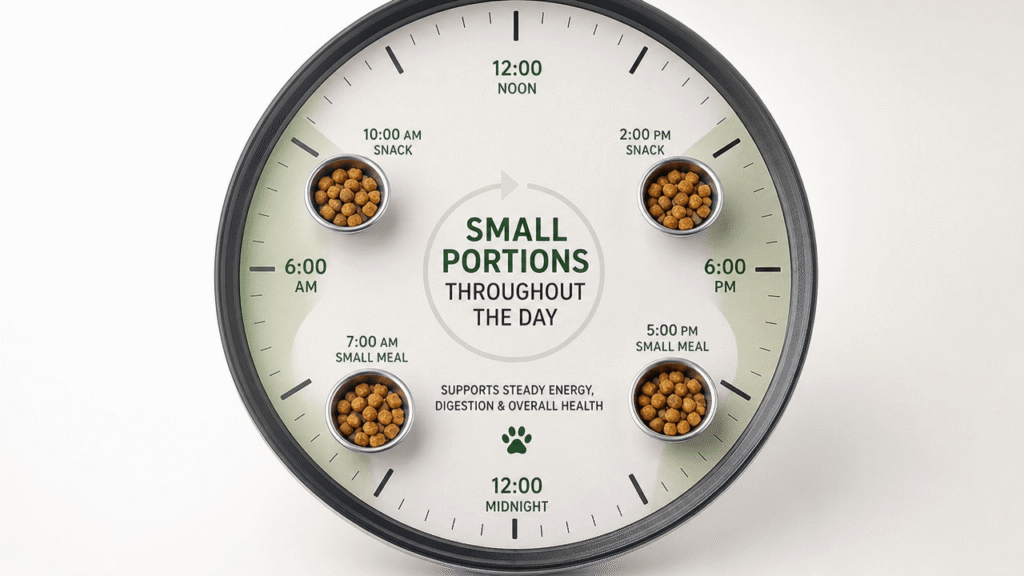
This is the part that actually matters. A feeder that preps one large wet meal and lets it sit for hours is solving convenience while creating a real hygiene problem — bacteria like Salmonella and Listeria can double every 15-20 minutes in the 40°F-140°F “danger zone,” and spoilage often shows no visible sign at all.
Riko’s answer is portion size. Instead of one big meal, it’s a dozen or more tiny ones, each made fresh right before the scheduled time. Shorter exposure window by default. That’s a genuinely smarter approach than most automatic feeders on the market, which are built around dry kibble and weren’t really designed for the safety demands of wet food at all.
But it only works if the cat shows up. Skip a feeding and that small portion sits there anyway, waiting for the next cycle or for someone to notice. Smaller-scale version of the same risk. Not eliminated.
Cleaning the Grinder: What’s Actually Untested
Neakasa’s FAQ does address cleaning, more than I gave it credit for. Each unit ships with a cleaning kit — a brush, cleaning solution, and three silicone desiccant packs — and the product is built with an airtight lid, a “self-sealing” grinder, and built-in desiccant specifically meant to keep the food chamber dry between uses.
That’s a real, specific answer, not silence. What it doesn’t tell you is how that translates to actual daily maintenance. A brush and solution being included doesn’t confirm the grinder is quick to strip down, or that dried paste won’t accumulate in tight mechanical corners a brush can’t easily reach.
Anyone who’s cleaned a blender or a coffee grinder knows “removable parts” and “actually easy to clean thoroughly, every day” aren’t always the same claim. This neakasa riko review can’t settle that question, since no independent review has tested it yet — whether the included kit is enough for the reality of daily use, or a five-minute box-opening demo versus a two-year household routine.
Food Compatibility: The Fine Print
Riko is built around freeze-dried food specifically. Individual pieces need to be under 15 × 15 × 25 mm — Neakasa’s own number, not a rough estimate. Bigger chunks won’t work reliably.
Dry kibble might technically go through it, but Neakasa says they don’t recommend it — the system is tuned for freeze-dried specifically. If your cat’s current food is freeze-dried treats rather than a complete, balanced diet, that’s also flagged as not ideal for a primary feeding method. The company says the app will support “popular freeze-dried brands with feeding guidance,” but no specific brand list has been published yet — so if you’re locked into a particular brand like Stella & Chewy’s or Primal, you won’t know for certain it fits until closer to shipping.
Neakasa’s Track Record: The M1 Precedent
Before backing any crowdfunded hardware, the company’s delivery history tells you more than the pitch video does. Neakasa’s M1 open-top litter box raised $1,159,278 on Indiegogo against a $5,000 goal back in late 2023. Unlike a lot of crowdfunded hardware that stalls in production limbo, real buyer threads from 2024 and 2025 confirm the M1 actually shipped and works — people comparing it directly against Litter-Robot, not complaining about a campaign that went dark.
That’s genuinely reassuring. Neakasa isn’t a first-timer with zero track record. But Riko is a different kind of hardware problem. Automating a litter box and precisely grinding-and-rehydrating food with consistent texture and hygiene are not the same engineering challenge. A good track record in one doesn’t automatically transfer to the other.
What’s Still Unknown
A few practical questions have no public answer yet, and it’s worth being upfront about that rather than filling the gap with a guess. How loud is the grinder motor, and does it run at hours that would wake anyone up — a cat expecting a 4am snack, for instance? What happens if a piece of freeze-dried food jams the mechanism?
How does the 7-day battery actually hold up under a full day of multiple grinding cycles rather than idle standby? None of this is answered in Neakasa’s marketing or FAQ, and there’s no independent hands-on review yet to check against. Any honest review has to say so plainly rather than paper over the gap.
Riko’s Kickstarter ran from mid-June through early August 2026 and raised $1,238,734 against a $40,000 goal — a strong demand signal, not proof any of these questions have good answers. The campaign has since closed and production is reportedly moving toward fulfillment, with shipping targeted for late August 2026 — worth confirming directly with Neakasa before assuming that timeline held, since crowdfunding shipping estimates shift often.
The Bottom Line
Riko is solving a real problem with a genuinely smart approach: small, fresh, frequent portions instead of one meal sitting out all day. Neakasa’s real delivery history on the M1 is a meaningfully positive signal, more than most crowdfunding pitches earn. But this is still a pre-production product. The internal-chute cleaning question is a real gap in what’s been disclosed, not a minor detail. Noise, jamming, and battery performance under real use are all open questions with no answer yet. Back it knowing that, not assuming the marketing copy covers everything it should.
If you like this post, you might like our other post => Litter that doesnt stick
Sources Referenced
Editorial and news sources (linked):