Coat Type Safety Guide for Dogs and Cats: Hidden Risks
A Bulldog left in a heated dryer box for even a few extra minutes faces a genuinely different risk than a Husky facing the same box: one can die from heat the other would barely notice. Most breed guides talk about temperament and shedding. This one is about the specific, verifiable equipment risks tied to coat type — the kind of detail that changes what’s actually safe to use.
A coat type safety guide for dogs and cats built around equipment risk rather than breed trivia has to start with the physical mechanism, not the marketing. Here’s what’s actually verified about brachycephalic heat sensitivity, double-coat alopecia, and curly-coat infections, and what specifically to check before you use any grooming equipment.
Quick Answer
| Coat Type | Primary Tool | Tool to Avoid | Highest Real Risk |
|---|---|---|---|
| Brachycephalic (Pugs, Bulldogs, Persians) | Hands-on towel dry, low-speed ambient fan | Heated dryer boxes, cage dryers with heat | Heatstroke and airway distress |
| Double-coat (Huskies, Goldens, Shepherds) | Undercoat rake, high-velocity air (no heat needed) | Clippers/shaving to the skin | Post-clipping alopecia, lost insulation |
| Curly/continuous-growth (Poodles, Doodles) | Slicker brush, finishing stand dryer | Surface-only towel drying, unvented boxes | Yeast dermatitis if not dried to the skin |
| All breeds (noise safety) | High-velocity dryer paired with ear hoodie or loose cotton | High-speed nozzle aimed at the head without ear protection | Acoustic distress and pain above ~90 dB |
Table of Contents
- Brachycephalic Breeds and Dryer Box Risk
- Double-Coat Breeds: The Alopecia Risk of Clipping
- Curly Coats: Moisture, Yeast, and Drying to the Skin
- The High-Velocity Dryer Noise Risk Nobody Mentions
- The Dematting Tool Risk
- US / Australia / Singapore Notes
- What People Get Wrong
- The Bottom Line
Brachycephalic Breeds and Dryer Box Risk
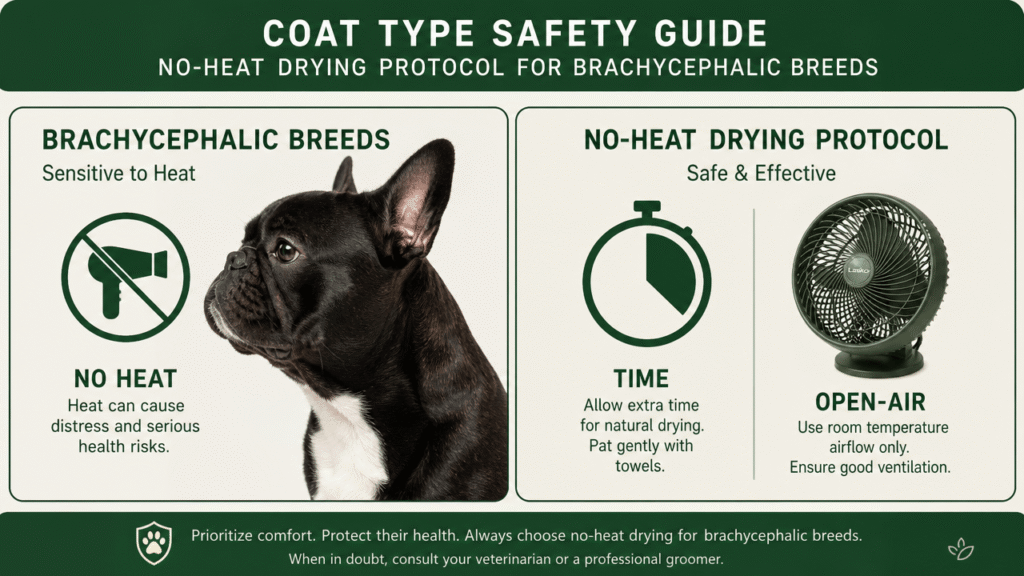
Flat-faced breeds — Pugs, French Bulldogs, Boston Terriers, Persian cats — already have a compromised airway before any grooming equipment enters the picture, which is exactly why heat and enclosed spaces are a genuinely different risk category for them than for other breeds. Grooming industry guidance is explicit that dog dryer boxes are only suitable for small, non-brachycephalic breeds, and should not be used on flat-faced dogs at all.
The core danger isn’t the heat setting alone — it’s what happens if something goes wrong. Overheating without adequate temperature monitoring, and fire or burn risk from an inadequately regulated heat source, are documented real risks with dryer boxes generally, and a brachycephalic dog has far less margin for error if a box runs hotter than intended or a fan fails partway through a cycle.
Some grooming discussions raise the concern that a sealed box with poor air exchange could also let exhaled carbon dioxide build up alongside heat stress — a plausible physiological concern, though it’s worth being direct that this specific mechanism is less rigorously documented than the overheating risk itself. Either way, the practical takeaway is the same: for brachycephalic breeds, hands-on towel drying or a low-speed ambient fan without heat is the safer default, not a heated enclosed box regardless of its temperature settings.
Double-Coat Breeds: The Alopecia Risk of Clipping
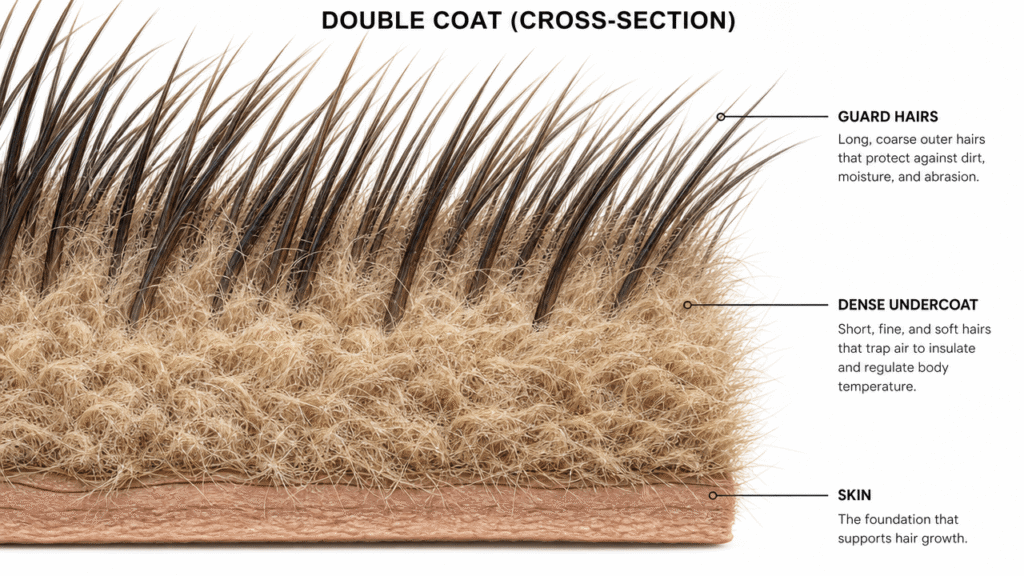
This is the risk most owners of Huskies, Golden Retrievers, German Shepherds, Samoyeds, and Chow Chows don’t find out about until after a full shave. Clipping a double coat down to the skin can trigger post-clipping alopecia, where hair follicles become arrested in the telogen (resting) phase and simply don’t resume normal growth. Regrowth typically takes 6 to 24 months, and in some dogs the coat never fully returns to its original density or texture.
The underlying cause still isn’t fully understood — one working theory is that the drop in skin surface temperature after clipping (from losing the coat’s insulation) somehow signals the follicle to stay dormant — but the practical implication is clear regardless of mechanism: shaving a double coat to the skin is not a reversible, purely cosmetic choice the way it might seem. An undercoat rake paired with a high-velocity air blower (no heat required) removes loose undercoat effectively without cutting into the guard hair layer that actually regulates temperature.
Curly Coats: Moisture, Yeast, and Drying to the Skin
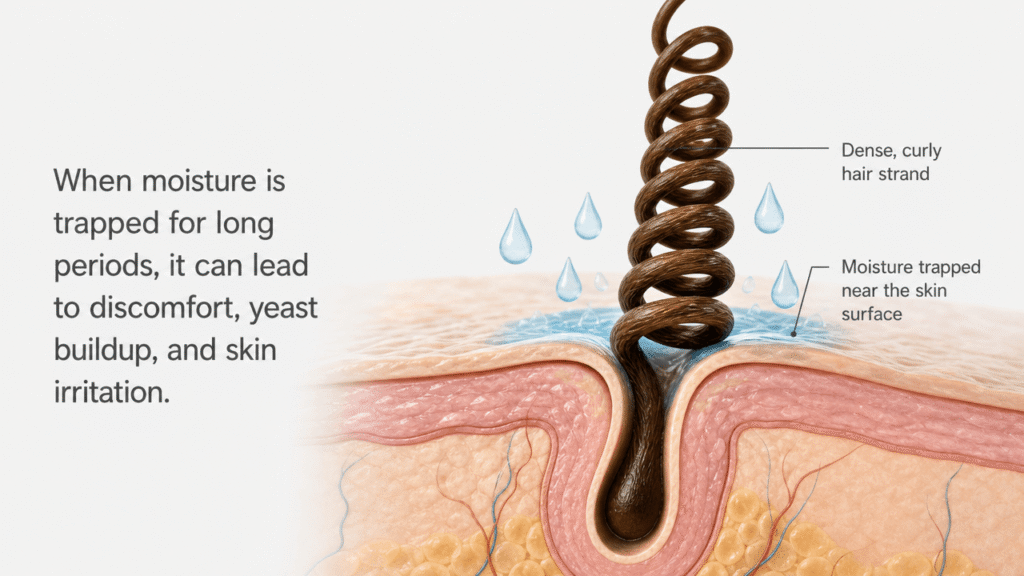
Poodles, Doodles, and similarly curly or continuously-growing coats trap moisture close to the skin far more readily than a straight coat does, and drying only the surface while leaving the undercoat damp is the specific mistake that causes problems here. Malassezia pachydermatis is a yeast normally present on healthy dog skin in small numbers, and increased moisture at the skin surface is one of several documented factors that can allow it to overgrow into genuine yeast dermatitis.
It’s worth being precise here, though: most Malassezia dermatitis cases are secondary to an underlying allergy or hypersensitivity, with moisture and skin-fold environments acting as aggravating factors rather than a sole standalone cause. Bacterial pyoderma and hot spots are the other, more familiar risk from the same root cause — trapped dampness at the skin level, not just a damp-looking coat surface.
The practical fix is the same regardless of which specific skin problem results: dry to the skin, not just the visible coat, using a stand dryer or finishing dryer with real airflow rather than stopping once the surface feels dry to the touch.
The High-Velocity Dryer Noise Risk Nobody Mentions
This applies across coat types, but it’s worth its own section because almost no grooming guide mentions it. A peer-reviewed study measuring four commonly used forced-air dog dryers found sound levels ranging from 94.8 to 108 decibels, measured at roughly the distance between the dryer and the dog being groomed. Dogs can experience pain or hearing damage starting around 85-90 decibels — a notably lower threshold than the roughly 110 decibels at which humans typically feel pain, meaning a dryer that’s merely loud to you can be genuinely painful to your dog.
A Happy Hoodie or simple cotton balls placed loosely in the ears (never pushed in) are the most commonly recommended mitigations, alongside starting at the lowest speed setting and keeping the nozzle further from the head and ears specifically than from the body.
The Dematting Tool Risk
A mat that’s tightened by water is a specific, avoidable mistake — bathing over an existing mat causes it to shrink and pull tighter against the skin, making it both harder and more dangerous to remove afterward.
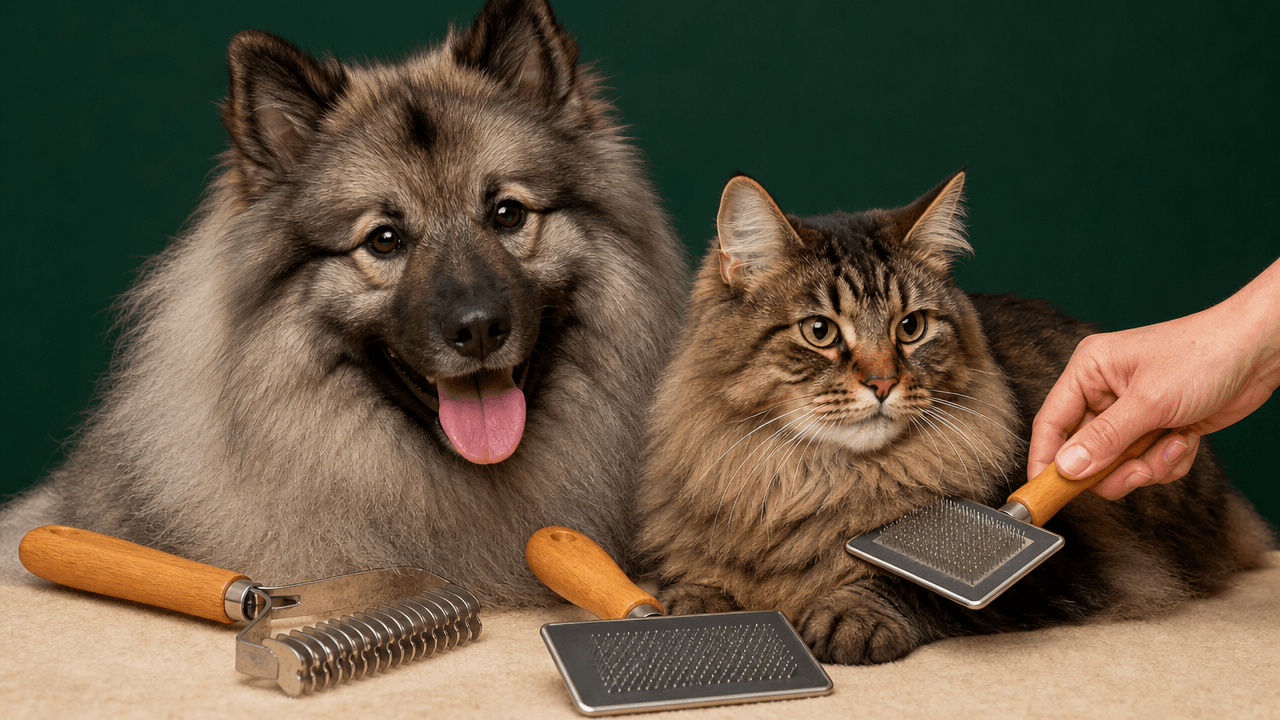
Trying to force a dematting rake or stiff slicker brush through a tightened mat risks tearing the thin skin underneath, especially in high-friction areas like the armpits, behind the ears, and the groin. Check for and address mats before bathing, not after, and if a mat is already tight against the skin, this is a job for a groomer with proper tools rather than a home dematting attempt.
US / Australia / Singapore Notes
United States: Standard grooming equipment and undercoat rakes are widely available; brachycephalic-specific low-heat dryer settings are increasingly common on newer dryer box models, but always verify with the manufacturer rather than assuming a “pet-safe” label covers your specific breed.
Australia: Double-coated breeds (Huskies, Shepherds) are common, and Australia’s warmer climate means the temptation to shave a double coat for “cooling” is real but counterproductive — the coat is doing more temperature regulation work than most owners realize, and clipping it off removes that function along with the risk of alopecia.
Singapore: Humidity is the dominant factor here specifically — curly and double coats both take meaningfully longer to dry fully in ambient humid air, which raises the real-world odds of the yeast and hot-spot risks described above if a coat is treated as dry before it actually is at the skin level. Budget more drying time than a drier-climate guide would suggest, and check at the skin, not just the surface, before deciding a coat is done.
What People Get Wrong
The most common mistake is treating “pet-safe” as a single universal claim rather than a coat-type-specific one. A dryer box genuinely safe for a Chihuahua isn’t automatically safe for a Pug, even though both are small dogs — the airway anatomy, not the size, is what matters for brachycephalic risk specifically.
The second mistake is assuming a double coat needs shaving to handle heat. The evidence points the other way: the coat is an active insulation system, and removing it via clipping trades a manageable shedding season for a real chance of permanent, patchy alopecia.
The Bottom Line
A coat type safety guide for dogs and cats built around real equipment risk comes down to three specific, verified mechanisms: brachycephalic breeds and heated enclosed spaces are a genuinely dangerous combination, double-coat clipping carries a real and sometimes permanent alopecia risk that’s more than cosmetic, and curly coats need to be dried to the skin, not just the surface, to avoid yeast and bacterial skin problems. None of this requires expensive new equipment — it requires matching what you already have to what your dog’s specific coat actually needs.
If you like this article, you might also like dog anxiety symptoms by breed
Sources Referenced
Editorial and veterinary sources (linked):
Bollsen Hearing Protection — Dog Hearing Protection, Expert Review
Dog Groomers Folkestone — Is a Dog Dryer Box the Right Choice for You and Your Furry Friend?
University of Minnesota — Canine Post-Clipping Alopecia, Small and Large Animal Dermatology Handbook
dvm360 — Focal, Non-Inflammatory Alopecia: A Diagnostic, Treatment Challenge
WagWalking — Post Clipping Alopecia in Dogs
MedVet — Yeast Dermatitis in Dogs
PMC/NCBI — Noise Impacts From Professional Dog Grooming Forced-Air Dryers