Toxic Foods and Plants for Pets by Region: Hidden Risks
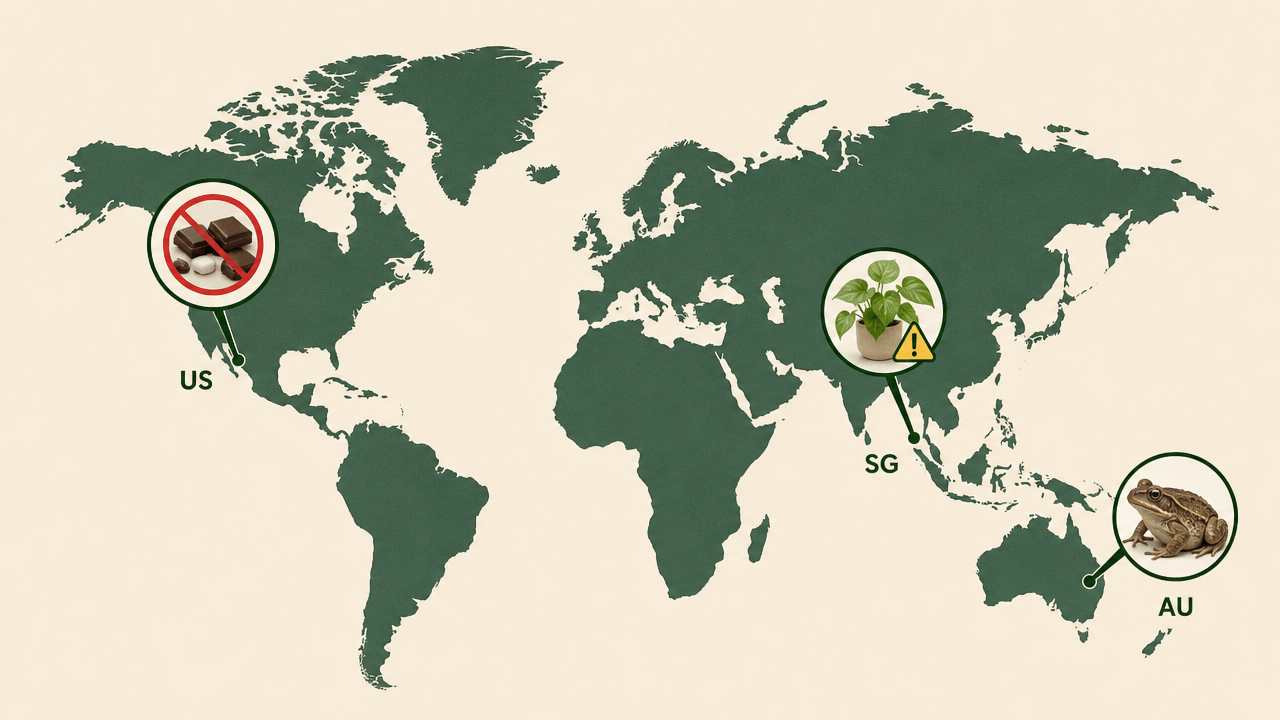
Every toxic foods list on the internet covers chocolate, grapes, and xylitol. Almost none of them mention that a dog in Queensland faces a genuine emergency risk that a dog in Ohio never will, or that a houseplant sold as “money plant” in Singapore might be the safe one or the dangerous one depending entirely on which actual species someone bought.
Toxic foods and plants for pets by region matters because the universal hazards (the ones every list already covers well) aren’t where most owners get caught off guard — it’s the specific, local thing nobody warned them about. This guide covers both: the universal list, done properly, plus the regional hazards for the US, Australia, and Singapore that generic lists consistently miss.
Quick Answer
| Category | Universal Hazard | Region-Specific Hazard |
|---|---|---|
| Food | Chocolate, xylitol, grapes/raisins, onions/garlic, alcohol, caffeine | Macadamia nuts (worse exposure risk in Australia specifically) |
| Plants | Lilies (cats), sago palm, oleander | Pong Pong tree (Singapore-native roadside tree), Dieffenbachia and ZZ plant (common Singapore houseplants) |
| Environmental | — | Cane toads (Australia — a genuine veterinary emergency, not a food or plant at all) |
| Naming confusion | — | “Money plant” can mean the safe Pilea or the toxic golden pothos in Singapore — check the botanical name |
Table of Contents
- The Universal Food Hazards
- The Universal Plant Hazards
- Australia-Specific: Cane Toads
- Australia-Specific: Macadamia Nuts
- Singapore-Specific: Common Houseplants
- The “Money Plant” Naming Trap
- What to Do If Your Pet Is Exposed
- What People Get Wrong
- The Bottom Line
The Universal Food Hazards
These apply to dogs and cats regardless of where you live, and they’re the foundation any toxic-foods list needs to get right before anything else. Chocolate, xylitol, alcohol, caffeine, grapes and raisins, onions and garlic, and macadamia nuts are the core list the ASPCA identifies as consistently dangerous. Xylitol specifically causes rapid insulin release leading to hypoglycemia, seizures, and liver failure, and it’s increasingly found hidden in sugar-free peanut butter, gum, and baked goods — a real risk precisely because owners don’t expect it in a “healthy” peanut butter treat.
Grapes and raisins deserve a specific caution: the exact toxic compound is still not fully identified, and even small amounts have caused acute kidney failure in some dogs, which means there’s no reliably “safe” small quantity to test. Onions and garlic cause red blood cell damage that can lead to anemia, and garlic is roughly five times more potent than onion by weight — cats are generally more sensitive than dogs, but both are genuinely at risk.
The Universal Plant Hazards
Lilies are extremely toxic to cats specifically and can cause fatal kidney failure from even small exposures — pollen, petals, or vase water are all sufficient; dogs are considerably less at risk from the same plant, though not entirely exempt.
Sago palm is a separate, serious universal hazard: the toxin cycasin attacks the liver and gastrointestinal tract, and every part of the plant, including the seeds, carries risk. Oleander is a third universal hazard worth naming directly, since it’s a common ornamental hedge plant in warm climates across all three regions covered here and is toxic enough to cause cardiac symptoms.
Australia-Specific: Cane Toads
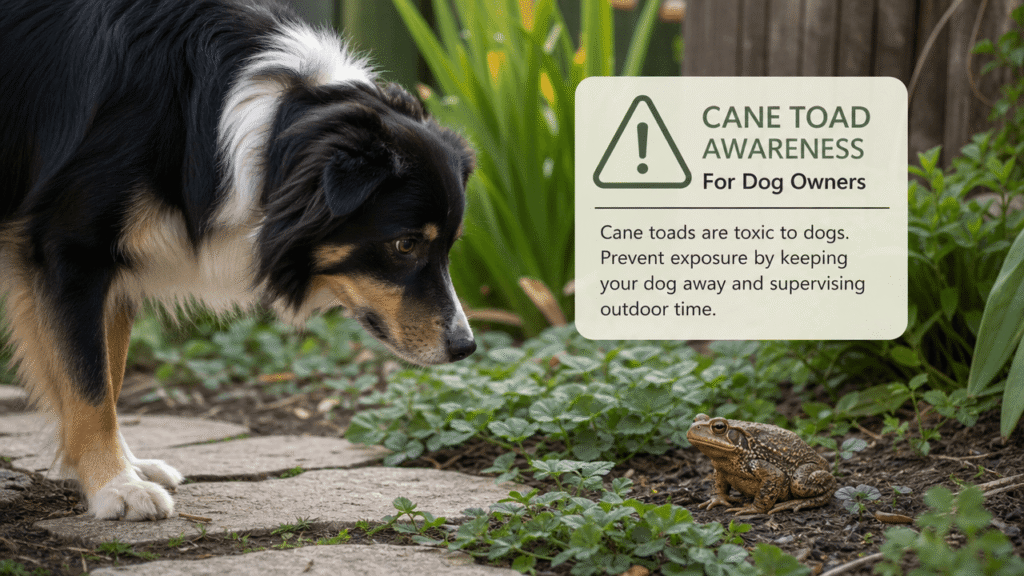
This is the single most important region-specific entry in this guide, and it isn’t food or a plant at all. Cane toads secrete a potent toxin from glands behind their neck that absorbs through a dog’s gums and tongue within seconds of contact, with symptoms appearing in as little as five minutes. The toxin is absorbed directly through the mouth’s mucous membranes — unlike a swallowed poison that takes time to digest, this one starts working almost immediately, which is exactly why speed matters more here than with most other hazards on this page.
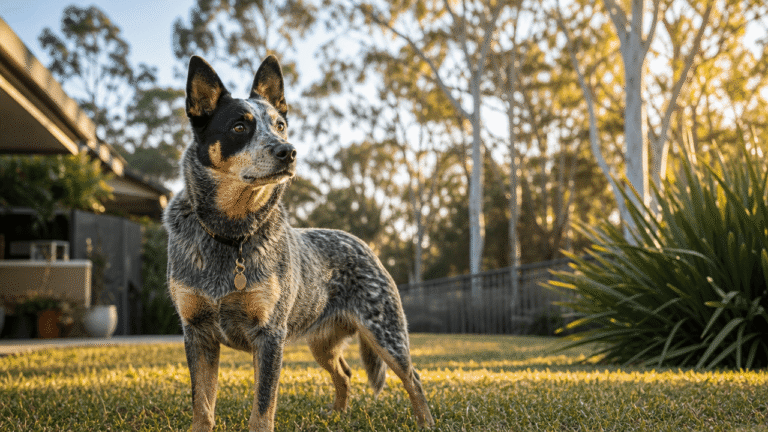
The toad population spans Queensland, the Northern Territory, Western Australia, and parts of New South Wales, and dogs — especially terrier-type breeds that chase and mouth small animals — are disproportionately affected.
If your dog mouths or bites a cane toad: wipe the inside of the mouth thoroughly with a damp cloth for 10 to 20 minutes, rinsing the cloth between wipes, and get to a vet immediately. Wipe from the back of the mouth forward, toward the front — this drags the toxin out rather than pushing it further back toward the throat. Never use a hose or run water directly into your dog’s mouth — this risks forcing water into the lungs and causing aspiration pneumonia on top of the toxin exposure.
Australia’s Animal Poisons Helpline (1300 869 738) can provide guidance while you’re on your way to the vet. If you live in or are visiting an affected region, keeping dogs on a lead or supervised after dark specifically reduces risk, since cane toads are nocturnal.
Australia-Specific: Macadamia Nuts
Macadamia toxicity affects dogs everywhere, but it’s a meaningfully higher real-world risk in Australia specifically, since macadamia trees are native there and far more commonly found in backyards and as windfall nuts a dog can access outdoors, not just as a packaged snack food kept safely in a pantry. The toxin was first documented in Australia in 1981 and, despite decades of study, the exact mechanism still isn’t understood.
The hallmark symptom is weakness in the hind legs — a wobbling, “drunk” gait — appearing 3 to 12 hours after ingestion, alongside vomiting, tremors, and hyperthermia. It’s rarely fatal and most dogs recover within 24-48 hours with supportive care, but “just a couple of nuts” isn’t a safe assumption to make, and recognizing hind-leg weakness specifically as a macadamia symptom (rather than assuming a fall or injury) helps you get a vet involved faster.
Singapore-Specific: Common Houseplants
Several plants that are genuinely common in Singapore homes and gardens carry real risk and don’t always show up on US-centric toxic-plant lists. The Pong Pong tree is native to Singapore and commonly seen along roadsides, with seeds that are highly toxic to pets and people alike — this is exactly the kind of hazard a generic American list would never think to include.
The mechanism is worth understanding, since it explains why symptoms show up so fast: both plants contain insoluble calcium oxalate crystals shaped like microscopic needles, which physically embed in the tongue and throat tissue the moment they’re chewed, triggering immediate swelling and drooling.
This is a mechanical injury as much as a chemical one, which is why rinsing the mouth with water can help flush out crystals still on the surface. Chrysanthemums, popular as both decorative flowers and tea ingredients in Chinese households, contain irritants related to compounds used in flea and tick pesticides and can cause vomiting, drooling, and skin rashes in pets.
The “Money Plant” Naming Trap
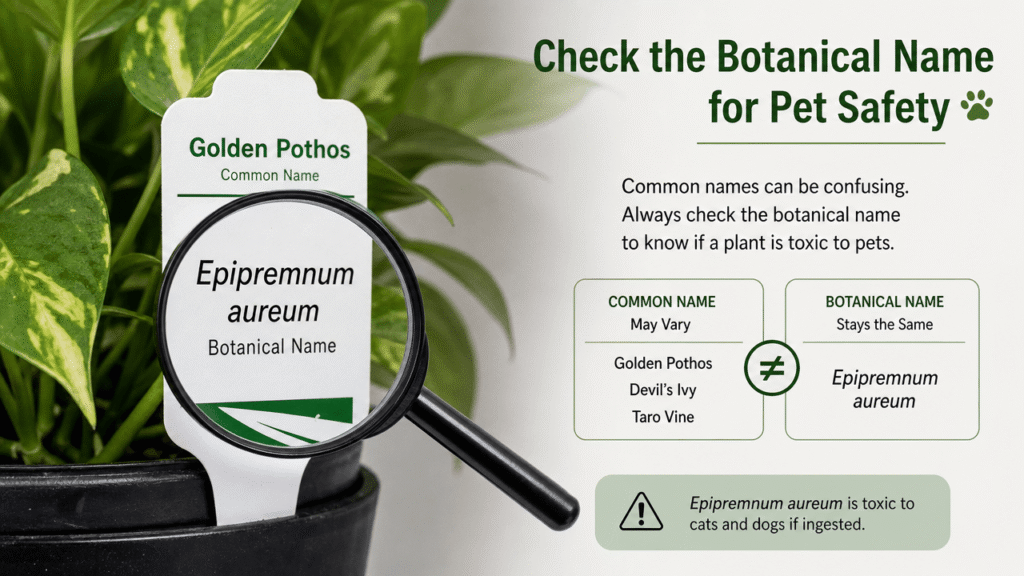
This is worth its own section because it’s a genuinely common, easy-to-make mistake — and it gets more tangled than a single Pilea-versus-pothos comparison. The common name “money plant” can refer to either Pilea peperomioides, which is non-toxic, or golden pothos, which is toxic.
The same naming confusion extends further: Pachira aquatica (often sold as “Money Tree”) is genuinely non-toxic to cats and dogs per ASPCA and Pet Poison Helpline data, but Crassula ovata — the jade plant — is toxic and is also commonly marketed as “Money Tree” or “Money Plant”. Two plants, both routinely sold under the same name, with opposite safety profiles.
| Common Name | Botanical Name | Toxicity |
|---|---|---|
| Chinese Money Plant | Pilea peperomioides | Non-toxic |
| Money Tree | Pachira aquatica | Non-toxic |
| Devil’s Ivy / Money Plant | Epipremnum aureum (pothos) | Toxic — calcium oxalate crystals |
| Jade Plant / Money Tree | Crassula ovata | Toxic — vomiting, lethargy |
The same is true of “palm,” which can mean a safe areca palm or a genuinely dangerous sago palm that isn’t a true palm at all despite the name. If you’re buying a plant based on a common name alone, check the actual botanical (Latin) name on the tag or ask the nursery directly, rather than assuming the name tells you what you need to know.
What to Do If Your Pet Is Exposed
For suspected food or plant poisoning generally: contact your vet or a pet poison control hotline immediately rather than waiting to see if symptoms develop, and don’t attempt to induce vomiting without direct professional guidance, since some toxins cause more damage coming back up than staying down. Bring the packaging, a plant sample, or a photo if you have one — identifying the exact substance changes the treatment approach significantly. For cane toad exposure specifically, follow the damp-cloth protocol above rather than any general poisoning advice, since flushing with running water is actively counterproductive in that specific case.
Emergency numbers by region:
- US: ASPCA Animal Poison Control Center — (888) 426-4435. Pet Poison Helpline — (855) 764-7661. Both operate as dedicated poison-control lines with veterinary toxicologists on staff.
- Australia: Animal Poisons Helpline — 1300 869 738, free for pet owners, and the number to call for cane toad or any other suspected poisoning while you’re on the way to a vet.
- Singapore: SPCA Singapore’s 24-hour line is 6287 5355, extension 9 — worth knowing, but it’s an animal welfare and rescue hotline, not a dedicated poison-control service, and SPCA’s own stated response time for welfare calls runs one to three hours. For a genuine poisoning emergency, calling your nearest emergency vet clinic directly is the faster, more appropriate first call.
What People Get Wrong
The most common mistake is treating a US-published toxic foods list as globally complete. These lists are usually accurate as far as they go, but “as far as they go” typically stops at the US border — cane toads, Pong Pong trees, and the specific plants popular in Singapore households simply aren’t on most American vets’ radar, and most American-authored lists reflect that blind spot.
The second mistake is assuming a common plant name is a safe identifier. “Money plant” and “palm” both span genuinely safe and genuinely dangerous species under the same casual name, and a nursery tag with only the common name printed on it isn’t enough information to make a safety call.
The Bottom Line
Toxic foods and plants for pets by region comes down to one practical habit: know the universal list cold, but don’t stop there. If you’re in Australia, cane toads are a genuine five-minutes-matter emergency risk that food-focused lists never mention. If you’re in Singapore, check the botanical name before trusting a common plant name, and know that Pong Pong trees are a real roadside hazard, not an exotic footnote. The universal hazards get all the attention online; the regional ones are usually what actually catches an owner off guard.
If you like this article, you might also like dog anxiety symptoms by breed
Sources Referenced
Editorial and veterinary sources (linked):
SPCA Singapore — Official Contact and Emergency Hotline
ASPCA — People Foods to Avoid Feeding Your Pets
ToxiPets — 47 Foods Toxic to Dogs and Cats: Complete Guide
Home & Decor Singapore — 10 Plants Toxic to Dogs & Cats
Club Pets Singapore — 12 Common House Plants in Singapore That Are Poisonous for Pets
PacPet Blog — Poisonous Plants in Singapore to Keep Away from Your Pet
The Bespoke Club — Pet-Friendly Plants for Homes With Cats and Dogs in Singapore
Aussie Animals — Cane Toad Poisoning in Dogs: Symptoms & First Aid
My Own Vet — Cane Toad Poisoning: What You Should Know
Greencross Vets — Cane Toad Poisoning in Dogs: Treatment & Prevention
Animal Emergency Service — Symptoms of Cane Toad Poisoning in Dogs
Merck Veterinary Manual — Macadamia Nut Toxicosis in Dogs