AI Dog Training Apps Review: What Real Owners Say After Months of Use
One Google Play review of a popular dog training app puts it bluntly: the company charged $95 with zero renewal warning, then pointed to a strict no-refund policy when the owner complained. That’s not a rare complaint either — it’s a documented, recurring pattern across dozens of reviews for the same app.
This AI dog training apps review isn’t built from press releases. It’s built from real App Store threads, a professional trainer’s actual methodology critique, and the side-by-side experience of owners who tried three or four apps back to back before figuring out which one actually worked for their dog.
Quick Answer:
| Your Situation | What to Know |
|---|---|
| New puppy, basic obedience | Pupford or Dogo — strong free/cheap video libraries |
| Behavior problems, want real feedback | GoodPup — live trainer access, not just videos |
| Considering Woofz | Screenshot the billing terms before you start the trial |
| Dog has aggression or bite history | Skip apps entirely — see a certified behaviorist first |
| Worried about lure dependency | Valid concern — see the trainer critique below |
Table of Contents
- The Woofz Billing Pattern, Documented
- A Trainer’s Real Critique of Lure-Based Apps, and What This AI Dog Training Apps Review Found
- Which Apps Actually Worked for Real Owners
- The Bark-Detection Treat Dispenser Angle
- Comparison Table
- The Good, The Bad, and The Verdict
- US vs. Australia vs. Singapore: What Changes
- The Verdict
1. The Woofz Billing Pattern, Documented
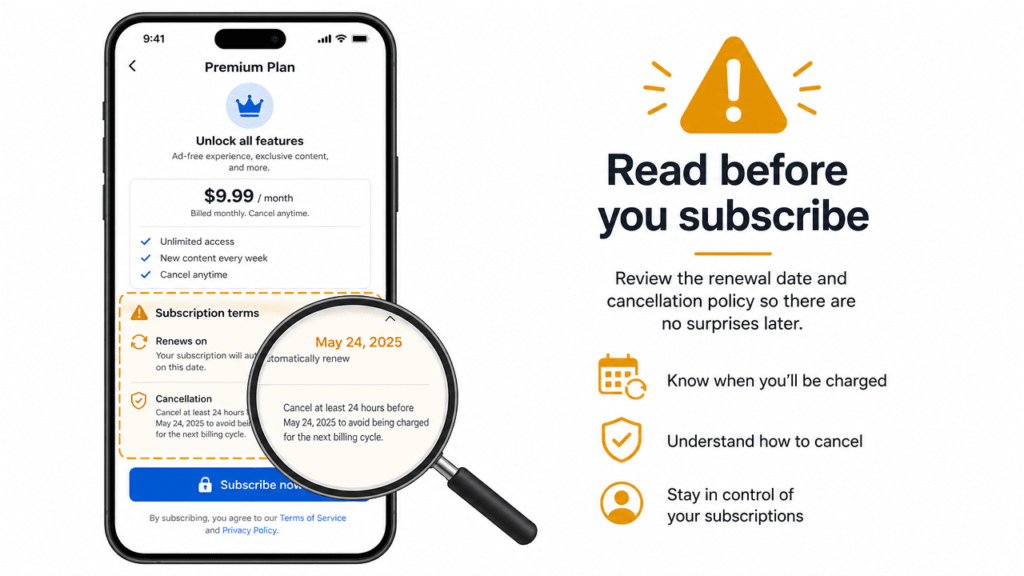
This AI dog training apps review has to start here, because it’s the single most consistent complaint across multiple independent platforms. Real Google Play reviews for Woofz describe a recurring pattern: a free trial that converts to a paid subscription with no renewal notification, then a charge — commonly cited around $95 — that the company’s own terms state is non-refundable.
The pattern repeats closely enough across separate reviewers that it reads as a structural feature of the billing flow, not isolated user error. One reviewer described being offered a 30% discount, then 40%, when they pushed back — a negotiation pattern that shows up in multiple independent complaint threads, not just one person’s account. The company’s standard response across these reviews is consistent too: a templated reply directing the user to email support rather than resolving it through the app itself.
A separate 2026 comparison source flagged this directly: Woofz is “the clearest example of why subscription transparency matters,” and recommended screenshotting the plan, billing interval, and cancellation terms before starting any trial — a precaution that shouldn’t be necessary but, based on the review pattern, genuinely is.
2. A Trainer’s Real Critique of Lure-Based Apps, and What This AI Dog Training Apps Review Found
This is the part most “best apps” roundups skip entirely, and it comes from an actual professional dog trainer who tested Puppr, Dogo, and GoodPup directly rather than just listing features.
The critique: nearly every consumer dog training app relies on lure-based training — using food to physically guide a dog into a position rather than teaching the dog to think through the behavior. The trainer’s specific concerns: the lure loses effectiveness the moment a real distraction shows up, the dog becomes dependent on carrying food to perform reliably, and the lure has to keep increasing in value over time to keep working. There’s also a secondary cost that’s easy to miss: owners using lure-based apps don’t learn to read their dog’s actual body language, which matters far more than any single trick once a real behavioral issue shows up.
This doesn’t mean the apps are useless — basic obedience and tricks are genuinely well-suited to lure training. It does mean an app is a poor substitute for a real trainer specifically when a dog already shows anxiety, reactivity, or aggression, which is exactly the situation where reading body language matters most.
3. Which Apps Actually Worked for Real Owners
A detailed first-person comparison (testing Dogo, Pupford, and GoodPup back to back over roughly four months with the same dog) is worth more than any single feature list, because it shows where each app’s approach actually mattered in practice.
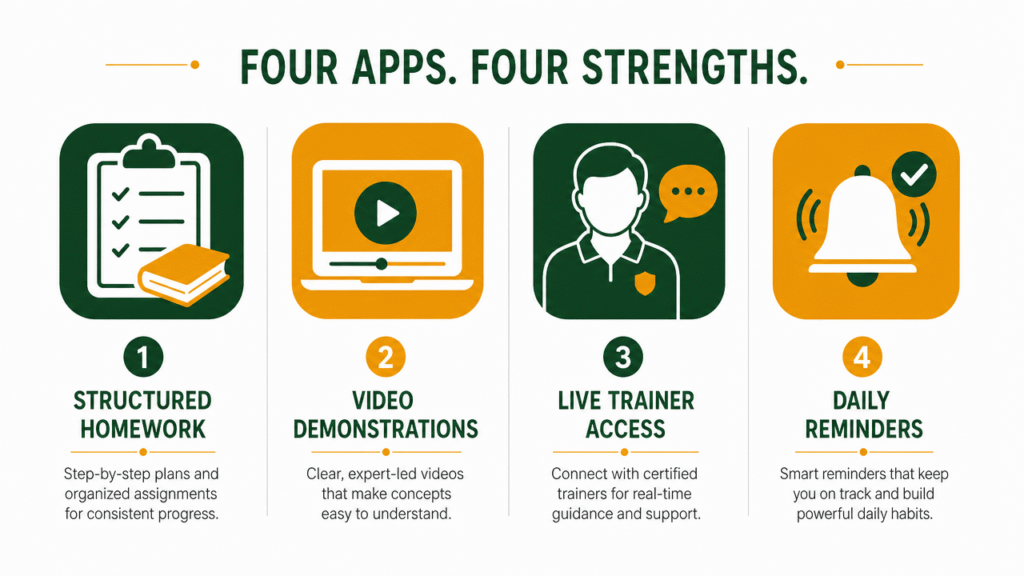
Dogo’s structured homework and repetition got specific credit for building a reliable daily routine — the same owner noted this consistency carried over and made the dog noticeably more prepared once they moved to other apps. Pupford’s video demonstrations, led by a recognizable trainer working with real, imperfect puppies on camera, got credit for showing what to do when a dog doesn’t perform a behavior correctly — something static text instructions can’t really convey. GoodPup’s live, one-on-one trainer access was rated the strongest overall for training clarity, specifically because the trainer adjusted in real time based on what the owner described, including a crate-training and separation issue that a generic video course wouldn’t have addressed directly.
The one fully consistent piece of advice across every source on this topic: don’t run multiple apps simultaneously. Pick one, commit to daily practice, and only add a second app later if you’ve genuinely outgrown the first.
4. The Bark-Detection Treat Dispenser Angle
A newer category worth knowing about separately from pure training apps: AI-powered treat dispensers that detect barking and trigger an automated response — typically a distraction sound or an automatic treat release timed to redirect attention before barking escalates. This is a genuinely different mechanism from an app teaching commands; it’s passive, automated behavior modification rather than active training sessions.
Vendor-reported results for this category (a drop from a high bark rate to a much lower one) should be treated as marketing claims rather than independently verified data — none of the sources covering this category cite a third-party study, just brand-supplied before/after numbers. The underlying mechanism (interrupting and redirecting a behavior before it peaks) is a legitimate, well-established training principle; the specific numbers attached to any one product are not independently confirmed.
5. Comparison Table
This table is the core of any honest ai dog training apps review — price alone tells you almost nothing without the real-world trade-off attached.
| App | Price | Best For | Real-World Issue to Know |
|---|---|---|---|
| Dogo | ~$9.99/mo or ~$99.99/yr | Structured daily homework, repetition | Pricing has been reported as inconsistent between app and website |
| Pupford | ~$9.99/mo, lifetime options available | Self-guided learners, strong free tier | No progress logging — you have to remember what you’ve already covered |
| GoodPup | Premium, live-trainer pricing | Real behavior issues, personalized feedback | Higher cost reflects real one-on-one trainer time, not just app access |
| Woofz | ~$9.99/week if uncancelled | Beginner-friendly guided programs | Documented pattern of surprise renewal charges — read billing terms closely |
6. The Good, The Bad, and The Verdict
This is where any ai dog training apps review earns its keep — matching the right app to the right problem, not just listing star ratings.
Dogo — The Good: the structured homework format builds a real daily habit, and the video feedback loop for tricks like “leave it” got specific praise for showing correction technique. The Bad: independent reviewers flagged inconsistent pricing between the app and the website, which has created confusion for new users. The Verdict: a solid, well-regarded starting point, especially for owners who want daily structure without live coaching.
GoodPup — The Good: real one-on-one trainer access genuinely outperforms pre-recorded content when a dog has a specific behavior issue, not just a trick to learn. The Bad: that level of access costs more than a self-guided app, and isn’t necessary for basic obedience. The Verdict: worth the premium specifically when you’re dealing with a real behavior problem, not just teaching sit and stay.
Woofz — The Good: a clean, beginner-friendly interface with daily reminders that several reviewers found genuinely motivating early on. The Bad: a well-documented, recurring billing complaint pattern across independent review platforms — surprise charges, no renewal notice, a strict no-refund policy. The Verdict: proceed only after reading the cancellation and renewal terms directly, not just the app store description.
7. US vs. Australia vs. Singapore: What Changes
Most of what this ai dog training apps review covers stays consistent globally — the real variable is live-trainer availability.
United States: Widest selection of training apps, with the most independent review coverage and the most competitive subscription pricing.
Australia: Most major training apps (Dogo, Pupford, GoodPup) are available via the Australian App Store and Google Play with AUD pricing, though GoodPup’s live-trainer model may have more limited availability depending on trainer time zones — confirm trainer availability before subscribing if real-time chat matters to you.
Singapore: App-based training works the same technically, but live-trainer features built around US-business-hours availability (like GoodPup’s real-time chat) may mean a significant time difference for actually reaching a trainer. Self-guided video apps (Dogo, Pupford) don’t have this limitation, since there’s no live component to schedule around.
8. The Verdict
This AI dog training apps review comes down to one honest split: self-guided apps are genuinely good value for basic obedience and tricks, and live-trainer apps are worth the premium specifically when a real behavior problem is involved. What isn’t worth it, based on the documented pattern, is signing up for any app without reading the billing terms first — and no app, however well-reviewed, should be the first response to aggression or a bite history. That’s a job for a certified behaviorist, not a subscription.
Accessories for dog training, interactive dog puzzle toy training, treat pouch dog training & clicker training kit dog.
If you like this post, you might like our gadgets section => New Gadgets