Smart Dog Feeder Review: The Bloat Question Nobody’s Smart Feeder Actually Solves
A real thread on DogForum.com asked a simple question: is there an automatic dog feeder that slows down a fast eater? The most upvoted, most direct answer was blunt: “There isn’t an automatic feeder that will do this.” Multiple replies pointed the original poster toward puzzle bowls and maze feeders instead — completely different, non-electronic products.
That’s the single most important thing in this smart dog feeder review, and it’s the thing almost no product page tells you upfront. If your dog eats too fast, a smart feeder’s scheduling and portion features don’t fix that risk on their own — and for certain breeds, that’s not a minor inconvenience, it’s a genuinely life-threatening gap. Here’s what a smart dog feeder actually does well, what it doesn’t, and which models hold up for bigger, more food-motivated dogs specifically.
Quick Answer:
| Your Situation | What You Actually Need |
|---|---|
| Large or deep-chested breed (Great Dane, GSD, Standard Poodle, Boxer, Doberman) | A genuine slow-feed maze bowl FIRST — bloat risk is real, see below |
| Want scheduling + portion control for a normal eater | A smart feeder with large-breed capacity (20+ cups) |
| Power outages are common where you live | Confirm battery backup — not all models have one |
| Multiple dogs, food stealing | Look for access-control/RFID models, same category as cat feeders |
| Small or flat-faced breed | Skip deep maze bowls — shallow ridge designs work better for short snouts |
Table of Contents
- The Bloat Risk Most Buying Guides Skip
- Why a Forum Full of Dog Owners Says Smart Feeders Don’t Actually Solve This
- What a Smart Feeder Is Actually Good For
- Large Breed Capacity: The Spec Most Smart Dog Feeder Review Roundups Skip
- Comparison Table
- The Good, The Bad, and The Verdict
- US vs. Australia vs. Singapore: What Changes
- The Verdict
1. The Bloat Risk Most Buying Guides Skip
Bloat — formally gastric dilatation-volvulus, or GDV — is a real, life-threatening emergency, not a vague health buzzword. It happens when the stomach fills with gas, food, or fluid and can twist on itself, cutting off both ends of the stomach. It requires emergency surgery and can become fatal quickly if untreated.
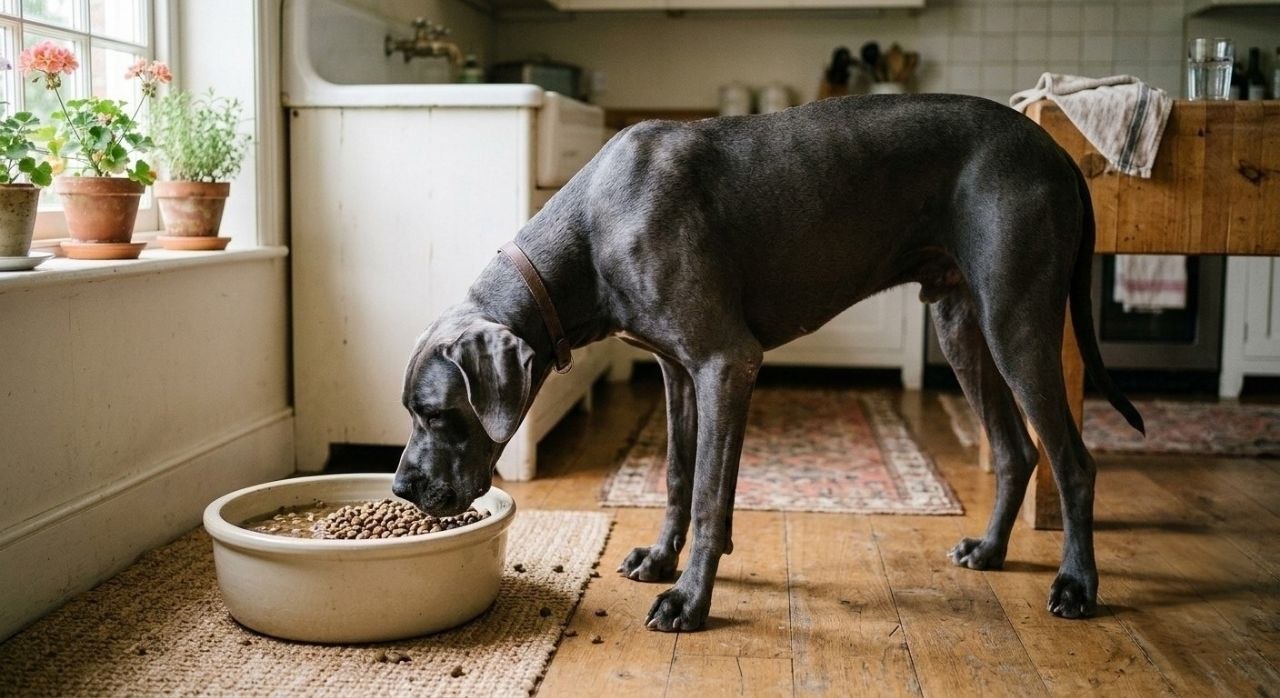
Fast eating is a major risk factor because dogs that gulp food also gulp air, and that swallowed air is a direct contributor to the gas buildup that can trigger an episode. The breeds most consistently flagged across veterinary and owner sources as highest-risk are large and deep-chested: Great Danes, German Shepherds, Standard Poodles, Doberman Pinschers, Weimaraners, Boxers, Basset Hounds, Saint Bernards, Old English Sheepdogs, and Gordon and Irish Setters.
If your dog is one of these breeds and eats in under a minute, this isn’t a “nice to fix eventually” issue. It’s worth addressing before anything else on this page.
2. Why a Forum Full of Dog Owners Says Smart Feeders Don’t Actually Solve This
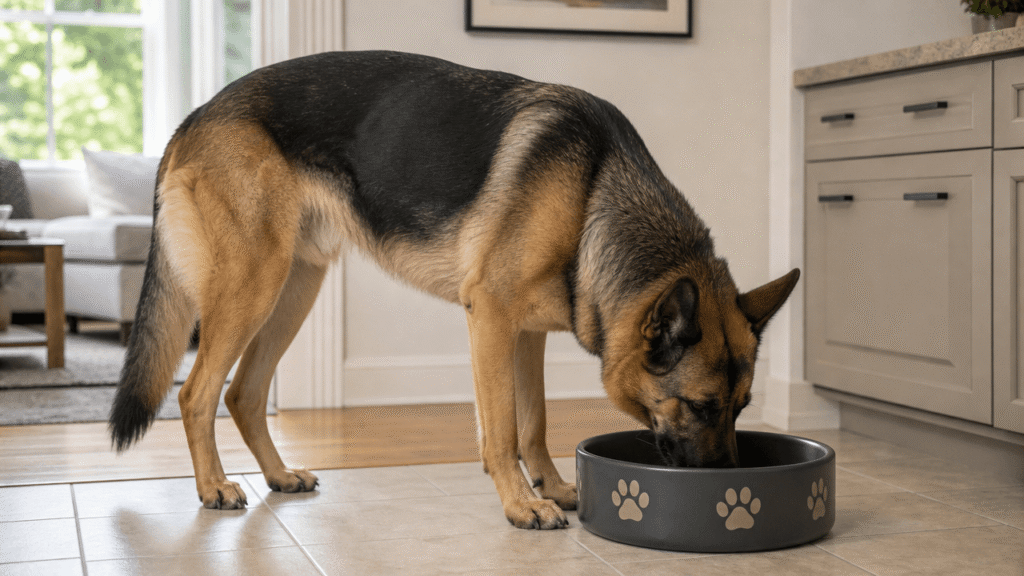
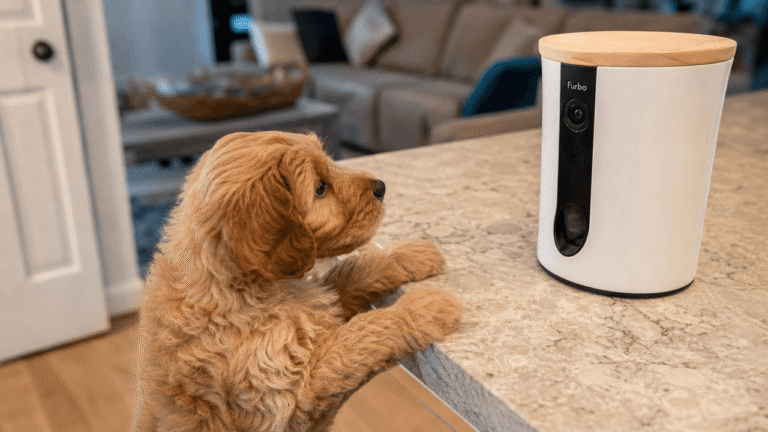
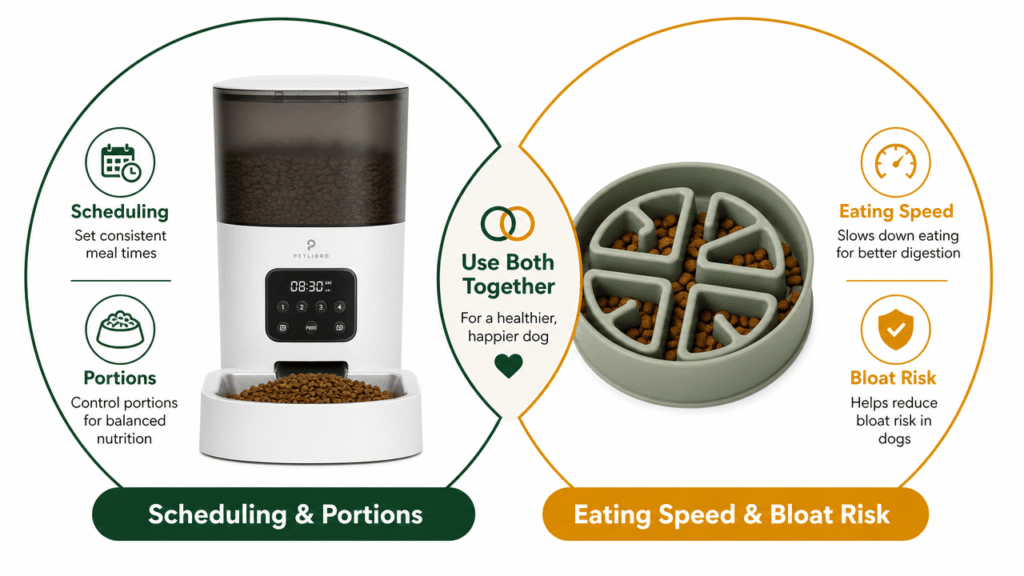
Here’s the honest mechanical reason behind that DogForum thread’s blunt answer. Most smart/app-controlled feeders dispense a measured portion into an open bowl — which controls how much food shows up, not how fast your dog can physically inhale it once it’s there. A fast eater will gulp a precisely-measured cup of kibble just as quickly as an imprecisely-measured one.
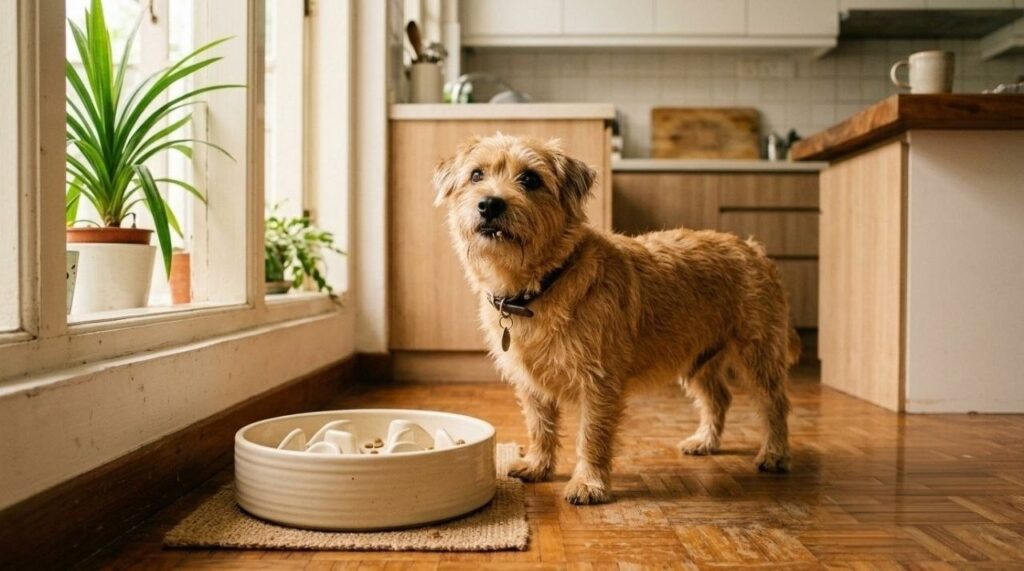
A true slow-feed bowl works completely differently — physical maze ridges, raised obstacles, or puzzle compartments force the dog to work around barriers to get each mouthful, which is what actually extends a meal from under a minute to five or ten minutes. Real owner accounts back this up specifically for bloat-prone dogs: one large-breed owner described their dog going from inhaling a meal in about a minute — with regular vomiting and excessive burping as a result — to 8-10 minutes per meal after switching to a maze-style bowl, with the digestive symptoms disappearing.
The practical takeaway: these are two different product categories solving two different problems. If fast eating and bloat risk is your actual concern, a slow-feed maze bowl is the more directly effective tool — and it’s worth pairing with smaller, more frequent meals (vets commonly recommend at least two meals a day rather than one large one) regardless of which feeder technology you use.
One model worth knowing about specifically: the PetSafe Smart Feed does include a genuine “Slow Feed” dispensing mode, which releases a portion gradually rather than dumping it all at once — a different mechanism than a maze bowl, but a real attempt to address pacing through the app-controlled feeder itself rather than ignoring the issue entirely.
3. What a Smart Feeder Is Actually Good For
None of this means smart feeders are pointless for dogs — it means they solve a different, real problem: consistent scheduling, portion accuracy for weight management, and remote feeding when you’re not home to do it yourself. For a dog that eats at a normal pace but needs reliable timing (multiple meals a day, consistent portions for weight control, or coverage when you’re away for a few hours), this is exactly the right tool.
The mistake is buying a smart feeder specifically because of bloat risk and assuming the scheduling features address it. They don’t, on their own — pair one with an actual slow-feed bowl or maze insert if both portion control and eating speed matter for your dog.
4. Large Breed Capacity: The Spec Most Smart Dog Feeder Review Roundups Skip
This is the other genuinely dog-specific issue cat-feeder buying guides never mention: capacity. A cat feeder built to dispense a few tablespoons per meal is completely inadequate for a large dog that needs several cups per meal, multiple times a day.
The models that actually work for big dogs tend to share a few specific traits: hopper capacity in the 24-34 cup range (versus the 4-6 cup range common on cat-focused units), portion sizing up to 4 cups per meal rather than fractions of a cup, and — critically — genuine battery backup, since these larger units are often relied on for longer unattended stretches and a power outage shouldn’t mean a missed meal for a large, food-motivated dog.
5. Comparison Table
| Model | Capacity | Slow-Feed Option | Battery Backup | Best For |
|---|---|---|---|---|
| PetSafe Smart Feed (large breed config) | Up to 24 cups | Yes — gradual dispensing mode | Yes | Big dogs needing scheduling + portion pacing |
| PetLibro Space | 34 cups (~7 lbs) | No | Check current model specs | Maximum capacity, longer unattended stretches |
| Maze/slow-feed bowl (non-electronic) | N/A — meal-sized | Yes — mechanical, most effective option | N/A | Genuine bloat-risk fast eaters, any size |
| Standard small/cat-focused smart feeder | 4-6 cups | Rarely | Varies | Not appropriate for large breeds |
6. The Good, The Bad, and The Verdict
PetSafe Smart Feed (large breed setup) — The Good: real reviewers specifically testing large-breed use confirmed the 24-cup capacity and 4-cup-per-meal portion range genuinely works for big dogs, not just on paper, and the battery backup was singled out as a “must-have” feature by one long-term reviewer in an area prone to power flickers. The Bad: it still requires a smartphone and stable WiFi to use the scheduling features at all — there’s no fully manual fallback mode if your network goes down. The Verdict: the strongest mainstream pick specifically for large dogs that need scheduling and portion control, paired with a slow-feed bowl if bloat risk is also a factor.
PetLibro Space — The Good: the largest capacity on this list, with vacuum-sealing tech aimed at keeping food fresher over longer stretches between refills. The Bad: less widely reviewed for slow-feed functionality specifically — treat it as a capacity-and-freshness pick, not a pacing solution. The Verdict: a strong choice if your priority is going longer between refills for a big dog, not a fix for fast eating.
Slow-feed maze bowls (non-electronic) — The Good: this is the category with the most consistent, direct real-world evidence of actually slowing eating speed and reducing bloat-adjacent symptoms like vomiting and excessive burping. The Bad: no scheduling, no portion automation, no remote feeding — it’s a single-mealtime tool, not a smart device. The Verdict: pair this with a smart feeder rather than choosing one or the other if both pacing and scheduling matter for your dog.
7. US vs. Australia vs. Singapore: What Changes
Any smart dog feeder review that ignores regional availability misses real price and access gaps.
United States: Widest large-breed feeder selection, through Chewy, Amazon, and Petco, with the most competitive pricing on bigger-capacity units.
Australia: Available through Pet Circle and Amazon.com.au; large-capacity units cost more to ship than smaller cat-focused feeders, so factor that into the price comparison against US listings. Australia uses 230V/50Hz with Type I plugs.
Singapore: Available via Lazada, Shopee, and Amazon.sg. Large-breed ownership is less common in Singapore given HDB flat-living constraints and breed-size restrictions covered elsewhere on this site, so genuinely large-capacity feeders see less local demand and may be harder to source locally compared to the US or Australia — direct import from a US or Australian listing is more often the practical route here, which brings the same plug-type (Type G, 230V/50Hz) and voltage-check considerations covered in our cat feeder guide.
8. The Verdict
The honest core of this smart dog feeder review: don’t buy a smart feeder expecting it to solve fast-eating or bloat risk on its own — a real forum thread of dog owners and multiple independent sources agree it generally won’t, with the partial exception of models that include a genuine slow-dispense mode. If your dog is a deep-chested, high-risk breed and a fast eater, get a maze-style slow-feed bowl first; treat a smart feeder as the right tool for scheduling and portion consistency, not pacing.
If you like this post, you might like our gadgets section => Gadget