
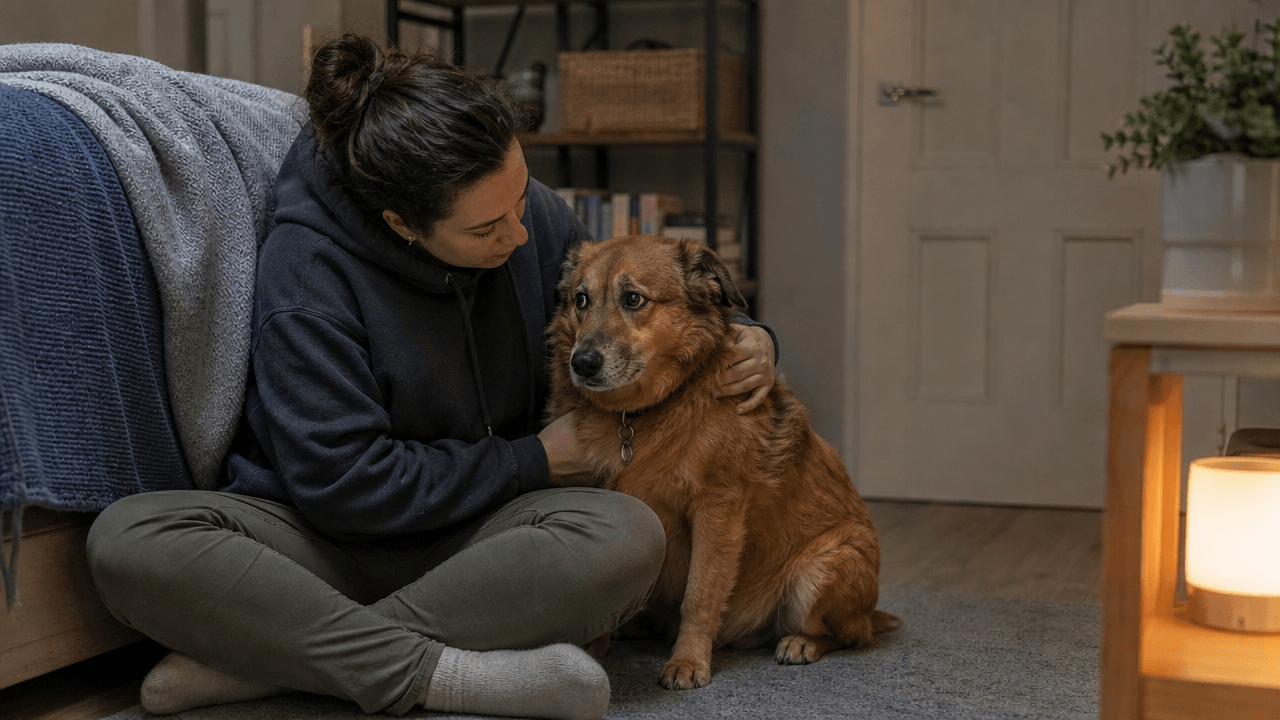
Pet Anxiety in Dogs and Cats — What’s Actually Going On
Most owners don’t recognise pet anxiety until it’s already a serious problem. By then the couch has been destroyed, the neighbours have complained about the barking, or the vet bills have started adding up.
A study published in Scientific Reports found that 70% of dogs display anxiety-related behaviours — from compulsive licking and noise sensitivity to full-blown separation panic. And it’s not just dogs. According to a 2022 survey of cat owners, loud noises, strangers, and other animals trigger anxious behaviours in over 50% of cats, while 34% show signs of separation-related anxiety.
Pet anxiety is one of the most common and most misunderstood problems in dog and cat ownership. This page covers how to recognise it, what’s actually causing it, and what genuinely helps.
Why Pet Anxiety Is More Common Than You Think
The numbers are striking. Between 20 and 40% of dogs referred to animal behaviour specialists in North America are diagnosed with separation anxiety — and that’s just the cases that make it to a specialist. The majority of anxious pets are never formally assessed at all. Fox News
A PetMeds survey of 2,000 pet owners found that 44% worried their pet was experiencing separation anxiety, and 42% had observed a change in their pet’s mental health and behaviour in the past two years. Yet 63% said they wanted more guidance understanding their pet’s health and behaviours — which is exactly why this page exists. q4cdn
Pet anxiety also got significantly worse after COVID. Anxiety caused by other dogs jumped from 16.5% in 2020 to 43.52% in 2022 as pets who’d spent two years with their owners at home suddenly had to adjust to being alone again. Many of those dogs and cats are still struggling. DVM360
7 Warning Signs Your Pet May Be Anxious
Anxiety in animals shows up differently depending on the species, the individual, and the trigger. These are the most common signals — and the ones most often mistaken for “bad behaviour.”
In dogs:
- Excessive barking or whining, especially when left alone
- Destructive chewing — furniture, shoes, doors, anything within reach
- Toileting accidents despite being house-trained
- Pacing, restlessness, or inability to settle even when tired
- Yawning, lip licking, or shaking when not wet or cold
- Refusing food before you leave the house
- Shadowing — following you from room to room constantly
In cats:
- Hiding for extended periods, especially in new environments or after changes at home
- Over-grooming — patches of thin or missing fur, often on the belly or inner legs
- Changes in appetite — eating significantly less or more than usual
- Litter box avoidance or eliminating outside the box
- Excessive vocalisation, particularly at night
- Aggression that seems unprovoked or out of character
The key distinction between anxiety and simple bad behaviour: anxious pets are not trying to be difficult. They are responding to genuine stress with the only tools they have.
What Actually Causes Pet Anxiety
Understanding the trigger is the first step to solving it. The most common causes:
Separation — Being left alone is the single biggest trigger for dogs. From an anxious dog’s perspective, their owner disappearing means they no longer have a reliable source of food, water, or care. It’s not dramatics — it’s a genuine fear response.
Loud noises — Fireworks, thunderstorms, construction. Noise phobia is one of the most treatable forms of anxiety but one of the least acted on by owners.
Change and disruption — Moving house, a new baby, a new pet, a change in routine. Dogs thrive on consistency and predictability — any abrupt change can cause stress.
Socialisation gaps — Pets that weren’t exposed to a variety of people, animals, and environments in early life are statistically more likely to develop anxiety around unfamiliar situations.
Medical causes — Pain, thyroid issues, and cognitive decline in older pets can all present as anxiety. Always rule out a physical cause with your vet before starting a behaviour programme.
What Actually Helps — Honest Answers
There’s a lot of bad advice about pet anxiety online. Here’s what the evidence and experienced owners actually support:
Routine — The single most effective first step. Meals, walks, playtime, and bedtime at consistent times every day. Predictability signals safety to an animal’s nervous system.
Calming pheromones — Adaptil for dogs and Feliway for cats are synthetic versions of the natural calming signals animals produce. They’re not sedatives and they don’t work for every pet — but many vets recommend them as a low-risk first intervention, and a significant number of owners report genuine improvement within a few weeks.
A dedicated safe space — A crate, a covered bed, or a quiet corner that belongs entirely to your pet. Somewhere nobody disturbs them. This is non-negotiable for anxious animals — they need a predictable retreat.
Gradual desensitisation for separation anxiety — Start with extremely short absences (two to three minutes), return calmly without fuss, and slowly extend the duration over weeks. This is slow work but it has the strongest evidence base of any behavioural intervention for separation anxiety.
Physical and mental exercise — An under-stimulated dog is an anxious dog. Daily exercise appropriate for the breed, plus puzzle feeders and enrichment activities, makes a measurable difference in baseline anxiety levels.
Professional help — If anxiety is severe, persistent, or getting worse, a certified animal behaviourist is worth the investment. A good behaviourist will assess the specific trigger, design a programme for your pet, and give you tools you can actually use at home. Your vet can also discuss medication options for severe cases — used alongside behaviour modification, not instead of it.
Pet Anxiety Guides & Resources
Our full pet anxiety guide covers signs, causes, calming products, and the behaviour techniques that actually work — with honest product reviews and real owner experiences.
👉 The Complete Guide to Pet Anxiety — Signs, Causes and What Actually Helps
For further reading, the ASPCA’s guide to separation anxiety is one of the most practical free resources available.
More dedicated pet anxiety guides and product reviews coming soon.