Best Self-Cleaning Litter Boxes in 2026 — Tested, Reviewed, and Brutally Honest
Written for cat owners worldwide — all prices in USD. Local availability notes for Australia and Singapore throughout.
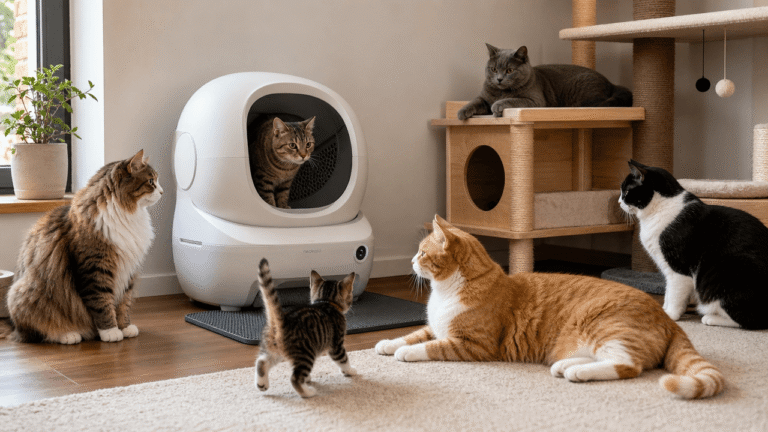
The 2026 lineup of automatic litter boxes is meaningfully better than what existed even two years ago — which is exactly why finding the best self-cleaning litter boxes for your specific cat now matters more than ever.
⭐ Quick Answer — Best Picks at a Glance
In a hurry? Here are our top picks. Scroll down for full reviews.
| Situation | Best Pick | Price (USD) |
|---|---|---|
| Best overall — multi-cat homes | Litter-Robot 4 | ~$699 USD |
| Best for apartments and HDB flats | PETKIT PuraMax 2 | ~$299 USD |
| Best compact — small spaces | Litter-Robot EVO | ~$599 USD |
| Best odour control | PetSnowy SNOW+ | ~$529 USD |
| Best for anxious or large cats | Neakasa M1 Plus | ~$299 USD |
| Best budget option (US only) | LitterMaid | ~$80 USD |
| Best for Singapore buyers | PETKIT PuraMax 2 | Local at petkitsingapore.com |
| Best for Australian buyers | Litter-Robot 4 | Local at catevolution.com.au |
📋Table of Contents
A Note for Apartment and HDB Dwellers
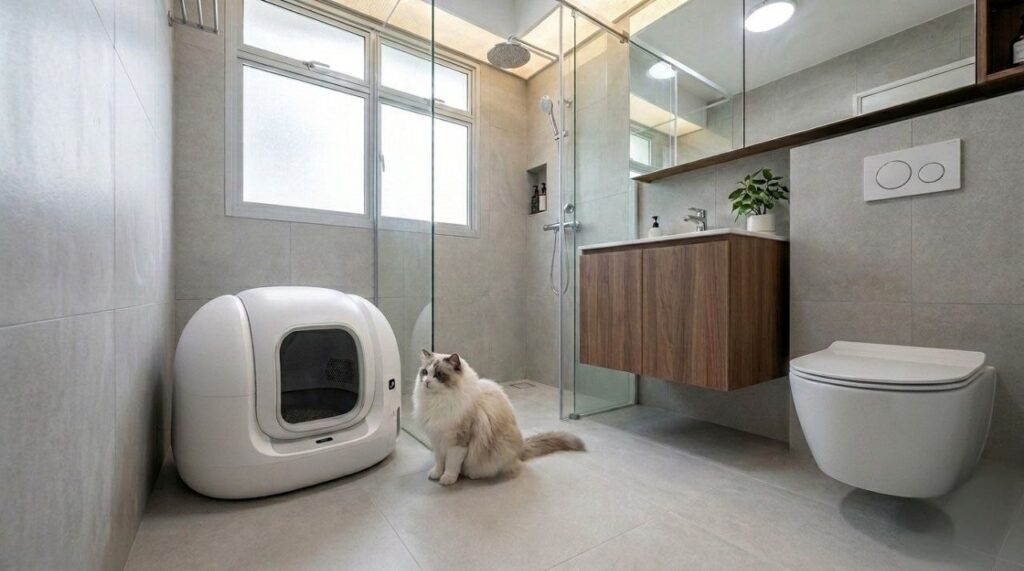
If you live in a Singapore HDB flat, Australian apartment, or any compact urban space — the buying criteria are fundamentally different from a freestanding house.
In a house with a laundry room, size barely matters. Noise doesn’t wake the neighbours. Litter scatter on a laundry floor is easy to deal with.
In a flat or apartment, three things matter above everything else:
Noise level — You share walls, floors, and ceilings with neighbours. The best apartment units run below 40 decibels — quieter than a normal conversation. The PETKIT PuraMax 2 and Litter-Robot EVO consistently rate as the quietest models in real-world apartment testing.
Footprint — Every square metre counts. Globe-style units like the Litter-Robot 4 are physically large. The newer Litter-Robot EVO and PETKIT PuraMax 2 are meaningfully more compact and better suited to tight bathrooms or storage spaces.
Odour control — In a compact space with limited ventilation, sealed globe designs with carbon filtration are significantly better than open rake designs. For HDB flats where the litter box may be in a bathroom adjacent to a bedroom — this matters enormously.
Our top Singapore/apartment pick: PETKIT PuraMax 2 — quietest in class, compact, excellent sealed odour control, officially available in Singapore at petkitsingapore.com with local warranty support.
How We Chose These Six
We looked at independent tests from CNN Underscored, Catster, Cats.com, and TechnoMeow — outlets that physically test units rather than paraphrase spec sheets. We cross-referenced with verified customer reviews across Amazon, Reddit communities, and owner forums across the US, Australia, and Singapore. We specifically looked for recurring complaints and failure patterns because that’s where the real picture of a product lives — not in the five-star reviews, but in the patterns of the three-star ones.
Quick Comparison Table
⚠️ All prices in USD. Prices correct at time of writing June 2026 and may have changed. Always check current pricing before purchasing. AUD and SGD prices will differ based on exchange rates and local retailer pricing.
| Litter-Robot 4 | Litter-Robot EVO | PETKIT PuraMax 2 | PetSnowy SNOW+ | Neakasa M1 Plus | LitterMaid | |
|---|---|---|---|---|---|---|
| Price (USD) | ~$699 | ~$599 | ~$299 | ~$529 | ~$299 | ~$80 |
| Mechanism | Rotating globe | Rotating globe | Rotating globe | Globe + auto-seal bag | Open-top rake | Rake |
| Best for | Multi-cat homes | Apartments 1–2 cats | Apartments 1–2 cats | Odour control | Anxious/large cats | Single cat budget |
| Cats supported | Up to 4 | Up to 2 | Up to 3 | Up to 3 | Up to 3 | 1 cat |
| Warranty | 2 years | 1 year | 1 year | 1 year | 1 year | 1 year |
| App | Excellent | Good | Good (ads in app) | Needs improvement | Good | None |
| Noise level | Very quiet | Very quiet | Very quiet ✅ | Quiet | Moderate | Noticeable |
| Footprint | Large | Compact ✅ | Compact ✅ | Large | Medium | Small |
| 🇺🇸 US | ✅ Amazon + official | ✅ litter-robot.com | ✅ Amazon.com | ✅ Amazon.com | ✅ Amazon.com | ✅ Amazon.com |
| 🇦🇺 Australia | ✅ catevolution.com.au | ⚠️ Import only | ✅ Amazon.com.au | ⚠️ Limited | ⚠️ Import only | ❌ Not available |
| 🇸🇬 Singapore | ⚠️ Import only | ⚠️ Import only | ✅ petkitsingapore.com | ✅ Shopee SG | ✅ Lazada/Shopee | ✅ Amazon.com |
1. Litter-Robot 4 by Whisker — The Gold Standard
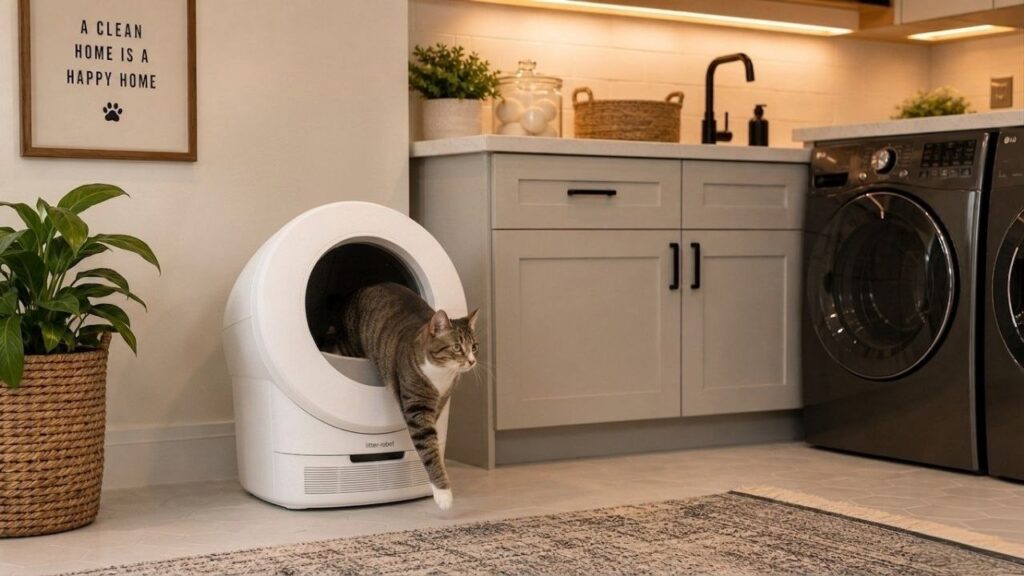
Price: ~$699 USD | Best for: Multi-cat households, proven reliability Not ideal for: Small apartments, tight spaces, Singapore buyers (no local distributor)
There is a reason the Litter-Robot 4 keeps winning every independent test. It is not the cheapest option. It is not the smallest. It is not trying to be everything. It is simply the most proven automatic litter box on the market, built by the company that invented the category and refined it across four generations.
The mechanism is a rotating sealed globe. After your cat exits, the unit waits a set time, then rotates the globe to sift clumped waste through an internal screen into a sealed drawer below. The process takes about two minutes and produces almost no noise — CNN Underscored called it “practically silent” after months of testing.
The Whisker app tracks each cat’s weight, visit frequency, and time spent in the box — data that can flag early signs of urinary issues or digestive problems before any other symptoms appear. For multi-cat homes with up to four cats, the box cycles reliably without the cleaning performance degrading.
What real owners complain about: At $699 USD it is a significant purchase. The globe entrance is not suitable for very large cats over 20 pounds. It requires clumping litter. And it is physically large — it takes up significant floor space.
Owner note from Reddit: “Had mine for two years with three cats, not a single mechanical issue. I’ve recommended it to five friends and all five are still using theirs.”
Where to buy:
- 🇺🇸 US: litter-robot.com or Amazon.com — 90-day trial, 2-year warranty
- 🇦🇺 Australia: catevolution.com.au — free shipping to capital cities, 90-day trial, 2-year local warranty
- 🇸🇬 Singapore: Import only — no official local distributor. Warranty support limited. Consider PETKIT PuraMax 2 instead.
2. Litter-Robot EVO — Best for Apartments and Small Homes
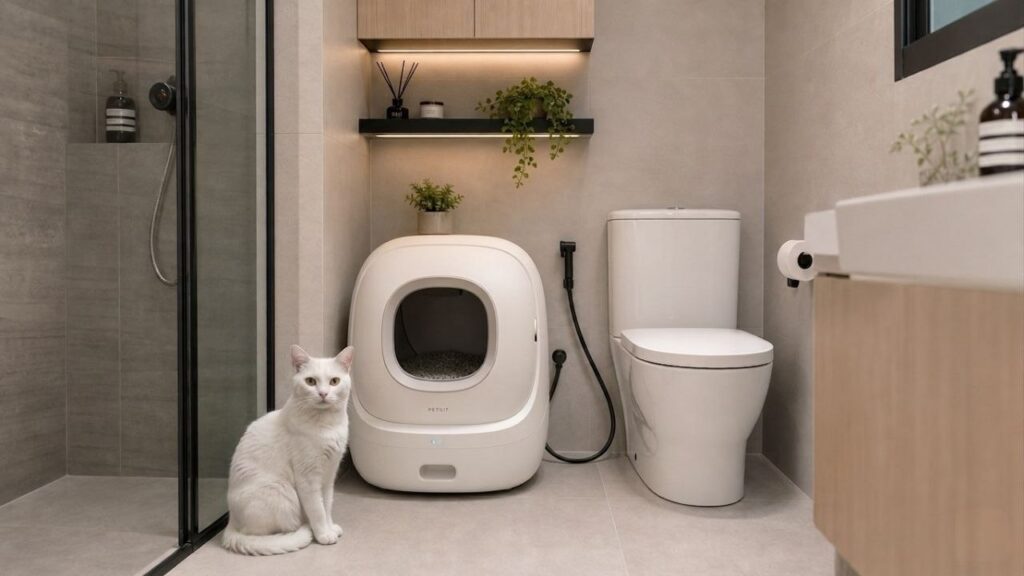
Price: ~$599 USD | Best for: Apartments, HDB flats, 1–2 cat households Not ideal for: 3+ cat homes, cats over 19 lbs
This is Whisker’s newest addition and the most relevant product for apartment and HDB dwellers. Launched in late 2025, the Litter-Robot EVO features the same self-cleaning technology in a significantly smaller footprint specifically designed for homes with 1–2 cats. Named “2026 Cleaning Awards Winner” by Good Housekeeping and “Top Pick for Best Automatic Cat Litter Box” by Wirecutter.
The EVO has a footprint of just 20.6 x 24.3 inches — the smallest Litter-Robot ever made. It fits in apartments, condos, and compact bathrooms where the Litter-Robot 4 simply will not fit. Its quiet operation won’t disturb neighbours through shared walls. At $599 USD it is $100 less than the full-size LR4.
The EVO shares the same sealed waste drawer, QuietSift cycling, weight tracking, and Whisker app as the full-size models — you’re getting the core Litter-Robot experience in an apartment-friendly package.
One caveat: The EVO is a new model with limited long-term ownership data. Early reviews are very positive but the 12–24 month reliability track record doesn’t exist yet.
Reviewer note: “For one- or two-cat households that want truly hands-free litter care in a compact footprint, the $599 USD Litter-Robot EVO is worth it.”
Where to buy:
- 🇺🇸 US: litter-robot.com — 1-year warranty
- 🇦🇺 Australia: Not yet available locally — import only. Check catevolution.com.au for updates
- 🇸🇬 Singapore: Import only. PETKIT PuraMax 2 remains stronger local choice
3. PETKIT PuraMax 2 — Best for Singapore and Apartment Dwellers
Price: ~$299 USD (sale price mid-2026, down from $449 USD) | Best for: Singapore and apartment dwellers, 1–2 cats Not ideal for: Cats over 15 lbs, 3+ cat homes
The PETKIT PuraMax 2 is currently $299.99 USD on Amazon as of mid-2026 — down from $459.99 USD, a 35% discount with over 1,000 units bought in the past month. Multiple independent reviews put it at delivering around 90% of the Litter-Robot 4’s functionality at significantly less than half the original cost. At current pricing it is the best value automatic litter box on the market.
Odour control uses a triple-layer filtration system — a spray deodoriser, a carbon filter, and a sealed waste compartment. Independent testers consistently rate it as the quietest model in its class. The app tracks each cat’s weight and litter box habits, flagging changes that could indicate health issues.
What real owners complain about: WiFi setup requires a 2.4GHz network — multiple reviewers reported needing two to three connection attempts. Once connected it is stable. The full health tracking features require the paid Care+ subscription. Several reviewers noted ads for other PETKIT products appearing in the app.
The original PuraMax had a leaking issue. PETKIT released the PuraMax 2 specifically to fix this — confirm you’re buying the Gen 2 version.
Owner note from Cats.com: “The Petkit PuraMax 2 offers 90% of the Litter-Robot’s quality for 60% of the price, with noticeably quieter operation.”
Where to buy:
- 🇺🇸 US: Amazon.com — check current pricing, has been on sale consistently
- 🇦🇺 Australia: Amazon.com.au — check current AUD pricing
- 🇸🇬 Singapore: petkitsingapore.com (official distributor) — same-day delivery for orders above S$399, local warranty and support ✅
4. PetSnowy SNOW+ — Best Odour Control
Price: ~$529 USD | Best for: Odour control priority, compact spaces with ventilation concerns Not ideal for: Larger cats (tight entryway), owners wanting low ongoing costs
The PetSnowy SNOW+ takes a different approach from every other product on this list. Its fully enclosed design traps odours alongside an efficient fan and TiO₂ deodorizer that neutralizes rather than just masks smells. The self-packing waste system automatically seals waste into bags — meaning you handle the waste directly as little as possible.
The magnetic assembly system makes deep cleaning significantly easier than most competitors — no tools required, just remove the parts and rinse. Setup out of the box takes under five minutes.
What real owners complain about: The entryway is on the tighter side — more appropriate for smaller cats. The app has received consistent criticism compared to Whisker’s polished experience. The ongoing cost of replacement waste bags and deodoriser cartridges adds up — factor this into total cost of ownership.
Note from Cats.com testing: “Cleaning was a breeze thanks to the magnetic attachment system — disassembly was simple and quick.”
Where to buy:
- 🇺🇸 US: Amazon.com and petsnowy.com
- 🇦🇺 Australia: Limited availability — check Amazon.com.au
- 🇸🇬 Singapore: sgsmartpaw.com and Shopee Singapore ✅
5. Neakasa M1 Plus — Best for Anxious Cats and Large Breeds
Price: ~$299 USD | Best for: Cats that refuse enclosed boxes, large breeds, anxious cats Not ideal for: Compact spaces, odour-sensitive apartments
The Neakasa M1 Plus solves a problem that every other product on this list does not address: some cats simply will not use an enclosed box.
The M1 Plus is an open-top automatic litter box — no dome, no globe, no enclosed entry. Your cat walks in like a regular litter tray. The automatic sifting mechanism then activates, separating waste from clean litter and moving it into a sealed compartment. Supports cats up to 33 pounds — significantly above any other model on this list.
What real owners complain about: Litter scatter is the most common complaint — the open-top design means more litter tracked outside the box. A good litter mat handles most of this. In an apartment context the open design also means less effective odour containment compared to sealed globe models.
Where to buy:
- 🇺🇸 US: Amazon.com
- 🇦🇺 Australia: Import only as of mid-2026
- 🇸🇬 Singapore: Lazada and Shopee Singapore
6. LitterMaid Single Cat — Best Budget Entry Point
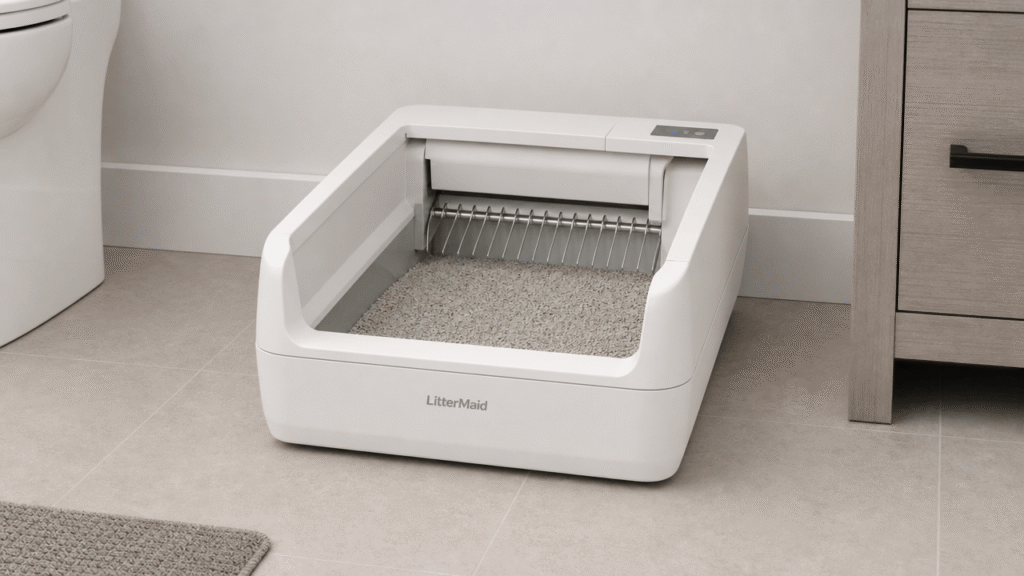
Price: ~$80 USD | Best for: Single-cat US households testing the concept Not ideal for: Apartments, odour-sensitive spaces, AU/SG buyers
Not everyone should spend $300 on a litter box. If you have one cat and want to test the concept without a major financial commitment, the LitterMaid is the most sensible starting point. No app, no WiFi, no health tracking. It just rakes.
Odour control is basic, the motor is noticeably louder than globe options, and it is primarily available in the US market. Not recommended for Singapore or Australian buyers due to limited local availability.
Where to buy:
- 🇺🇸 US: Amazon.com ✅
- 🇦🇺 Australia: Not readily available
- 🇸🇬 Singapore: Amazon.sg
Which of the Best Self-Cleaning Litter Boxes Should You Buy?
You have 3–4 cats and want the most proven reliability: → Litter-Robot 4 (~$699 USD)
You have 1–2 cats in an apartment, HDB flat, or small space: → Litter-Robot EVO (~$599 USD) if importing is fine — compact, quiet, proven Whisker technology → PETKIT PuraMax 2 (~$299 USD) for the best value, especially with local Singapore availability
You’re in Singapore and want local warranty and support: → PETKIT PuraMax 2 — official Singapore distributor at petkitsingapore.com
You’re in Australia: → Litter-Robot 4 via catevolution.com.au — full local support, 90-day trial → PETKIT PuraMax 2 via Amazon.com.au if budget is a consideration
Odour control is your absolute top priority: → PetSnowy SNOW+ (~$529 USD)
Your cat refuses enclosed boxes or is a large breed: → Neakasa M1 Plus (~$299 USD)
You want to test the concept with minimal financial risk (US only): → LitterMaid (~$80 USD)
Things Nobody Tells You Before You Buy
Before you commit to one of the best self-cleaning litter boxes on this list, here’s what nobody puts in the product listing.
Your cat may need two to three weeks to accept it. Place the new box next to the old one and let your cat explore at their own pace. Do not remove the manual box until you’ve confirmed your cat is using the automatic one consistently.
Clumping litter is non-negotiable for globe designs. Crystal litter, non-clumping litter, and most plant-based litters will not work with the Litter-Robot or PETKIT mechanisms. The PetSnowy SNOW+ is more flexible with litter types.
WiFi setup for PETKIT requires 2.4GHz, not 5GHz. During PETKIT setup, temporarily separate the frequencies in your router settings.
Budget for ongoing costs. Waste drawer liners, odour filters, and replacement cartridges add up. The PetSnowy SNOW+’s self-sealing bags are an ongoing cost — factor this in.
In apartments noise matters more than specs say. The PETKIT PuraMax 2 and Litter-Robot EVO are consistently the quietest in real-world apartment testing.
Health tracking only works reliably with one cat. In multi-cat homes, weight-based cat identification can get confused when cats are similar in size.
Frequently Asked Questions
Do self-cleaning litter boxes actually control odour? Globe-style sealed designs — Litter-Robot, PETKIT PuraMax 2, PetSnowy SNOW+ — do an impressive job. Open-top designs like the Neakasa are better than a manual box but less effective in confined spaces. For apartments and HDB flats, sealed globe designs are strongly recommended.
Are they safe for cats? Yes, when used as designed. All six models have safety sensors that stop the cleaning cycle if a cat enters mid-cycle.
Can kittens use them? Most have a minimum weight threshold of 1.5–3 lbs. The Neakasa M1 Plus has a specific kitten mode. Check the specs for your model.
How often do I need to empty them? For a single cat — every 3–7 days on the Litter-Robot and PETKIT. For three cats, every 1–2 days.
Which is best for a Singapore HDB flat? The PETKIT PuraMax 2 — quietest in class, compact footprint, excellent odour control, and officially available locally through petkitsingapore.com with local warranty support.
Is the Litter-Robot available in Singapore? Not officially. Import options exist but warranty support is limited and import costs add significantly to the price. The PETKIT PuraMax 2 with official local distribution is the more practical alternative for most Singapore buyers.
For more on the technology behind these devices, see our self-cleaning litter box guide.
SmartPawParent covers honest reviews, buyer’s guides, and practical advice for cat owners across the United States, Australia, and Singapore. We use affiliate links — if you click through and buy something, we may earn a small commission at no extra cost to you. We only recommend products we’d genuinely stand behind.