
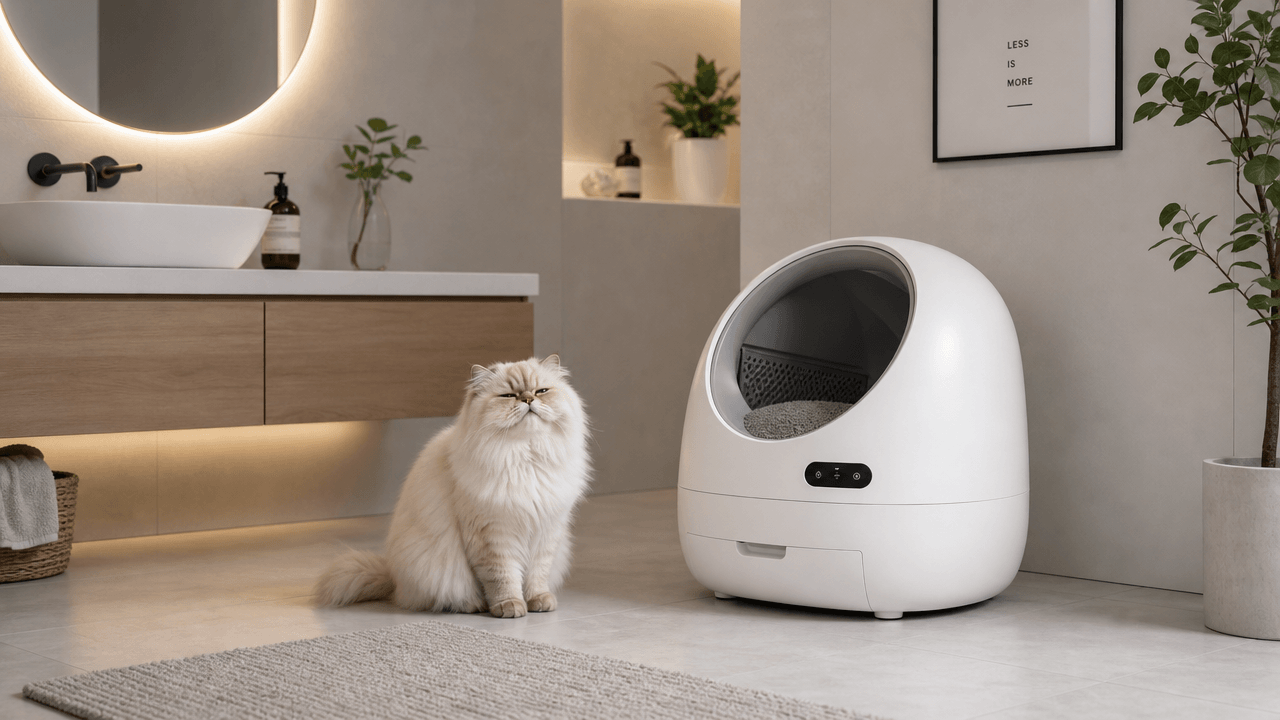
Self-Cleaning Litter Box — What Every Cat Owner Needs to Know
Nobody enjoys scooping litter. It’s the part of cat ownership that every enthusiastic new cat parent quietly dreads once reality sets in. A self-cleaning litter box won’t make you a better owner — but it will absolutely make you a more sane one.
The global self-cleaning litter box market hit $660 million in 2024, and it’s growing fast — not because of clever marketing, but because cat owners who switch rarely go back. The question isn’t really whether a self-cleaning litter box is worth it. It’s whether you’re buying the right one, and whether your cat will actually use it.
This page covers everything you need to know before spending money on one.
Why Cat Owners Are Making the Switch
The obvious reason is convenience. But the real reason experienced cat owners swear by automatic litter boxes goes deeper than just skipping the scoop.
Keeping a litter box consistently clean reduces bacterial buildup and may decrease the risk of urinary tract infections in cats. Cats are notoriously clean animals — many will refuse to use a soiled box and eliminate elsewhere instead. Because self-cleaning boxes are generally cleaner than traditional litter boxes, many cats accept them readily.
The second reason is health monitoring. Modern self-cleaning litter box models connect to a smartphone app that tracks your cat’s visit frequency, time spent in the box, and weight. Changes in any of these — more frequent visits, longer duration, sudden weight loss — are among the earliest detectable signs of urinary issues, kidney problems, and diabetes. You’re essentially getting a passive health monitor built into something your cat uses every day.
Owners on Reddit’s r/cats consistently report the same experience: they bought the box for the convenience and stayed for the health data.
How a Self-Cleaning Litter Box Actually Works
The mechanism varies by model, but the basic principle is the same. A sensor detects when your cat enters and exits the box. After a set delay — usually a few minutes — the cleaning cycle activates, separating clumped waste from clean litter and depositing it into a sealed waste compartment. You empty the compartment every few days to a week depending on how many cats you have.
The two main cleaning styles are:
Globe-style rotation — The entire litter chamber rotates, sifting waste through a screen into a sealed drawer below. This is the Litter-Robot approach. Thorough, quiet, and reliable, but the globe shape puts some cats off initially.
Rake-style sweeping — A mechanical rake passes through the litter, pushing clumps into a waste bin at one end. Simpler, usually more affordable, but less thorough with smaller clumps and can jam with certain litter types.
What to Look For Before You Buy
Not every self-cleaning litter box is worth the price tag. These are the factors that actually separate good models from frustrating ones:
Safety sensors — This is non-negotiable. Some automatic litter boxes rotate on the Y-axis, meaning the entrance completely closes during the cleaning cycle — creating a potential entrapment risk if sensors fail. Only buy models with proven, reliable motion sensors that halt the cycle if your cat is detected nearby.
Cleaning mechanism — Globe rotators are more thorough. Rake sweepers are more affordable. If you have a cat that buries aggressively, globe-style handles it better.
Waste compartment size — Directly affects how often you need to empty it. If you have multiple cats, prioritise larger capacity. The general rule is one litter box per cat, plus one extra. Some households replace multiple traditional boxes with one large-capacity automatic model — check the manufacturer’s recommended cat limit.
Litter compatibility — Most self-cleaning models require clumping litter. Cats have preferences for certain litter types, and if the required litter doesn’t match your cat’s preference, they may refuse to use the box. Check compatibility before buying.
Noise level — Important if your cat is easily startled or the box is near a bedroom. Budget models tend to be louder. Quieter motors cost more but the difference is noticeable.
App connectivity — The best models track usage frequency, duration, and weight. For multi-cat households, some can distinguish between individual cats.
Odour control — Sealed waste compartments with carbon filters make a real difference, especially in apartments or smaller homes.
The Honest Downsides Nobody Mentions
A self-cleaning litter box is a genuinely useful piece of pet tech — but it’s not perfect, and the Reddit threads are full of buyers who wish they’d known a few things first.
Your cat might refuse it. Some cats, especially older ones or those set in their habits, won’t go near a new box that makes noise or moves. Transition slowly — place the new box next to the old one and let your cat investigate at their own pace before removing the traditional box.
The subscription/ongoing cost adds up. Waste bags, replacement liners, and litter cartridges (on some models) are ongoing costs beyond the upfront price. Factor these in when comparing models.
Cheap models can be dangerous. Some low-cost automatic litter boxes sold on Amazon and Walmart have design flaws that pose entrapment risks to cats. Stick to well-reviewed brands with documented safety records and responsive customer service. The Animal Reader
You can miss health signals. A traditional litter box forces you to look at what your cat is producing. An automatic one removes that. If your cat has a health issue, the app data helps — but only if you’re actually checking it.
Self-Cleaning vs Traditional — Is It Worth It?
For most cat owners with a steady routine and a cat that adapts to change reasonably well — yes. Whisker’s Litter-Robot 4 alone has earned over 60,000 five-star reviews and sold over 1.5 million units globally — that’s not a niche product anymore.
The break-even point most owners cite is around 6–12 months. The time saved on daily scooping, the reduction in litter odour, and the early health monitoring make the upfront cost feel reasonable in retrospect. The owners who regret buying one are usually those who bought a cheap model without proper safety sensors, or who didn’t transition their cat slowly enough.
Ready to Find the Right Model?
Our full buyer’s guide covers every major self-cleaning litter box available for cat owners in the US, Australia, and Singapore — with honest verdicts, real owner feedback, subscription cost breakdowns, and which models to avoid.
👉 Best Self-Cleaning Litter Boxes in 2026 — Tested, Reviewed and Brutally Honest
More country-specific guides for Australia and Singapore coming soon.